










For generations, schools have been places of learning — where young minds are tested, challenged, and moulded. But in today’s world, they must also become places of healing and understanding.
At Trinity, we recognise that mental health is not a distant subject to be discussed once a year — it is an urgent, living reality that shapes the lives of our students every single day. The truth is, no child can thrive academically if they are silently struggling emotionally.
Over the past decade, awareness of mental wellbeing has grown across Sri Lanka. We have seen counselling units, awareness programmes, and curricula that speak more openly about emotions and resilience. Yet, despite this progress, mental health often remains shrouded in silence — especially within schools, where young students face a multitude of invisible pressures.
The Hidden Weight Students Carry
Today’s students are growing up in a fast-paced, demanding world — one that often measures worth by performance. Between academic competition, social media influence, peer pressure, and uncertainty about the future, many young students find themselves overwhelmed, anxious, or emotionally drained.
As adults, we often ask “Why are they struggling?” But perhaps we should be asking “How are they coping?” and “Do they feel safe enough to talk?”
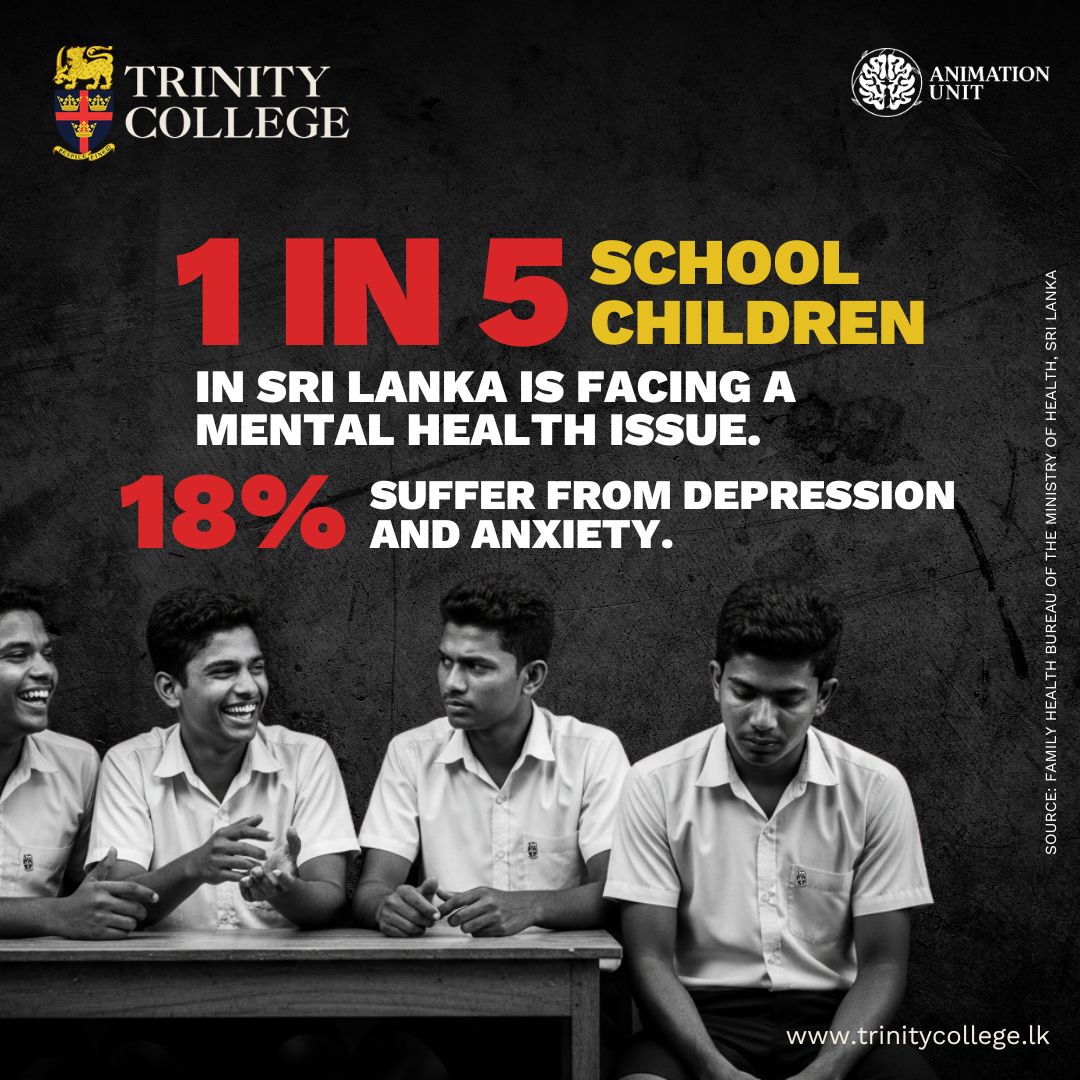
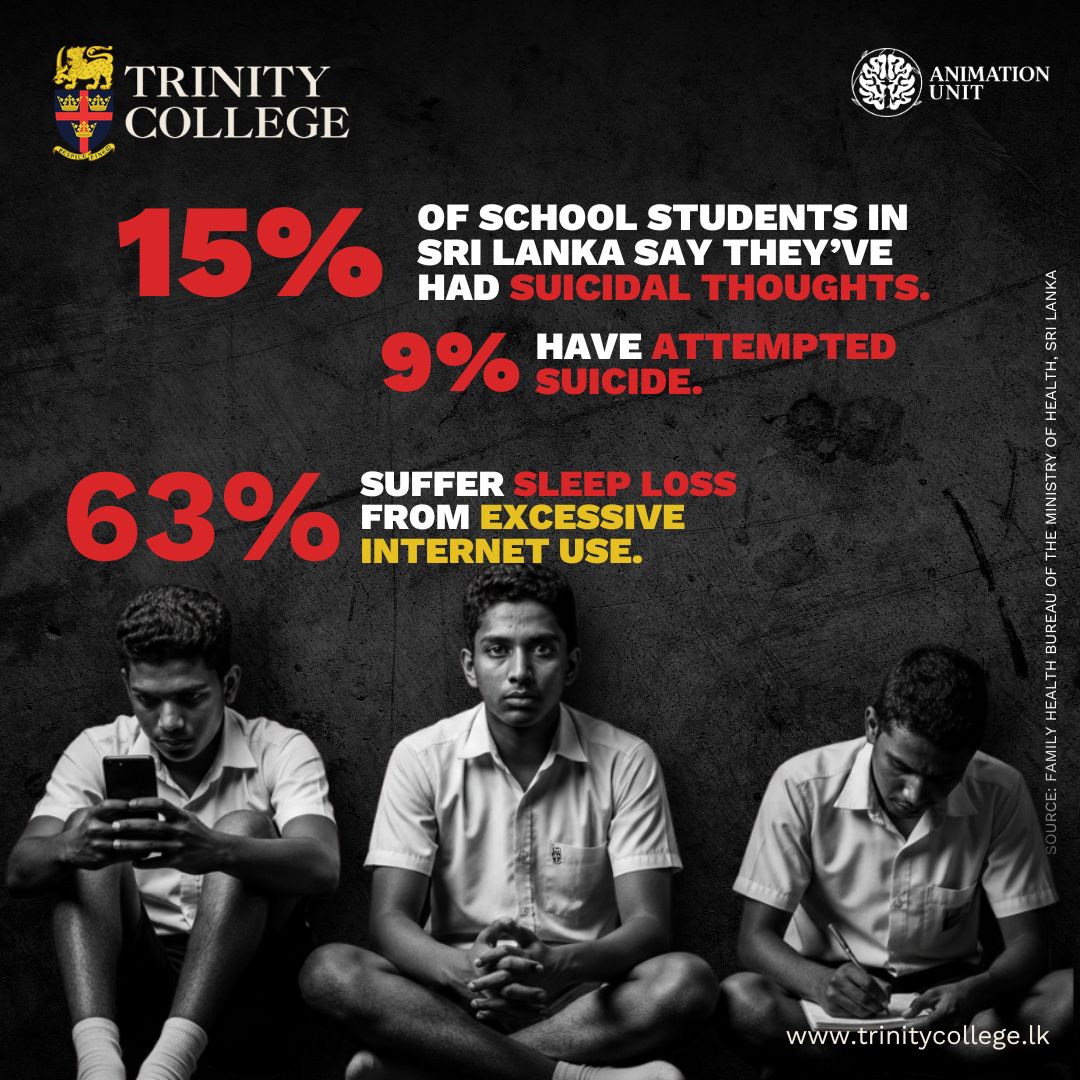
According to the Family Health Bureau of the Ministry of Health, nearly 1 in 5 school children in Sri Lanka is living with some form of mental health issue. Behind these numbers are real children — in real classrooms — who may smile in the morning but cry quietly at night.
This is not an abstract statistic. It is a reminder that behind every student’s silence, there might be a story waiting to be heard.
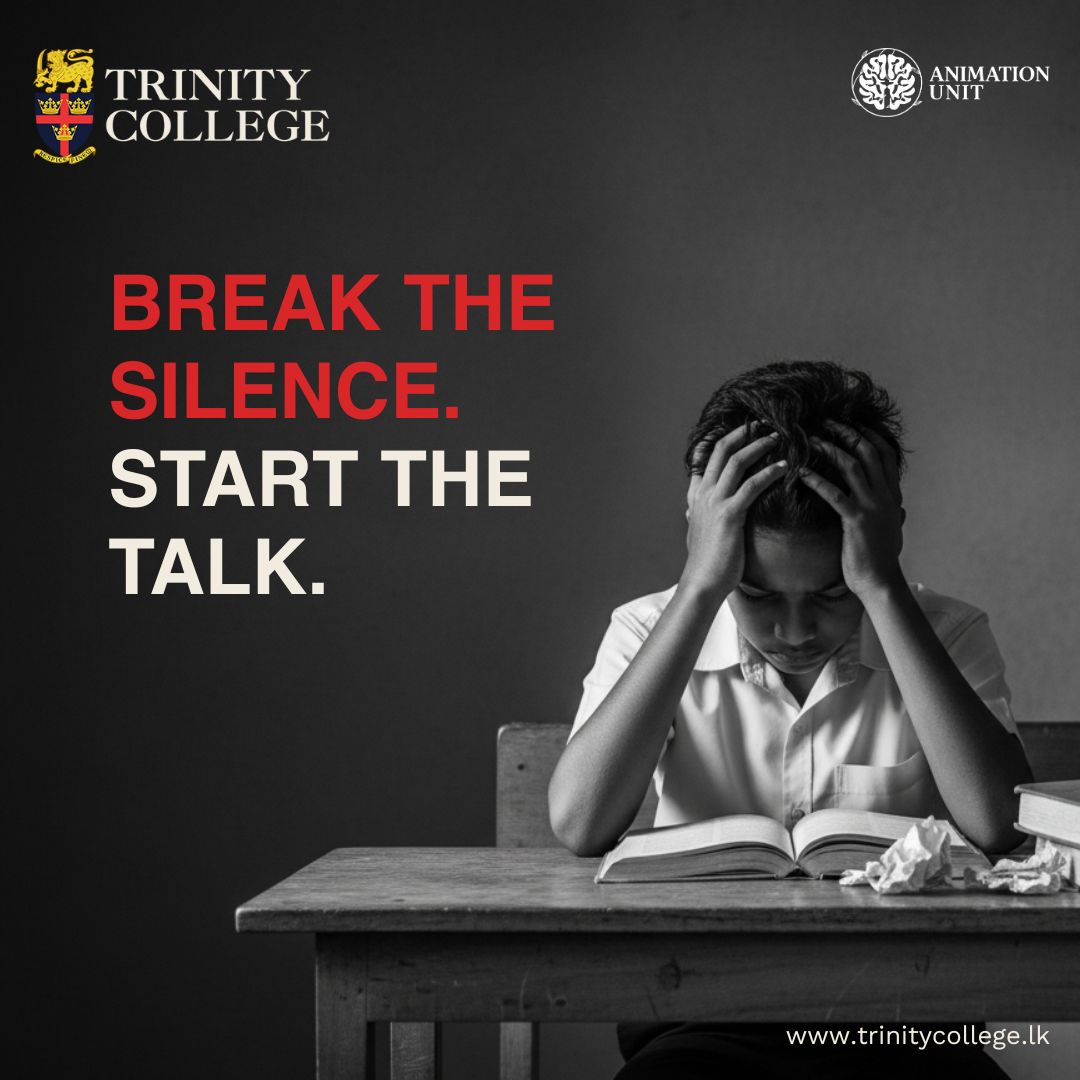
Breaking the Silence
The first and most powerful step towards change is conversation.
For too long, mental health has been considered something to whisper about — a sign of weakness, an uncomfortable topic. But the truth is simple: talking saves lives.
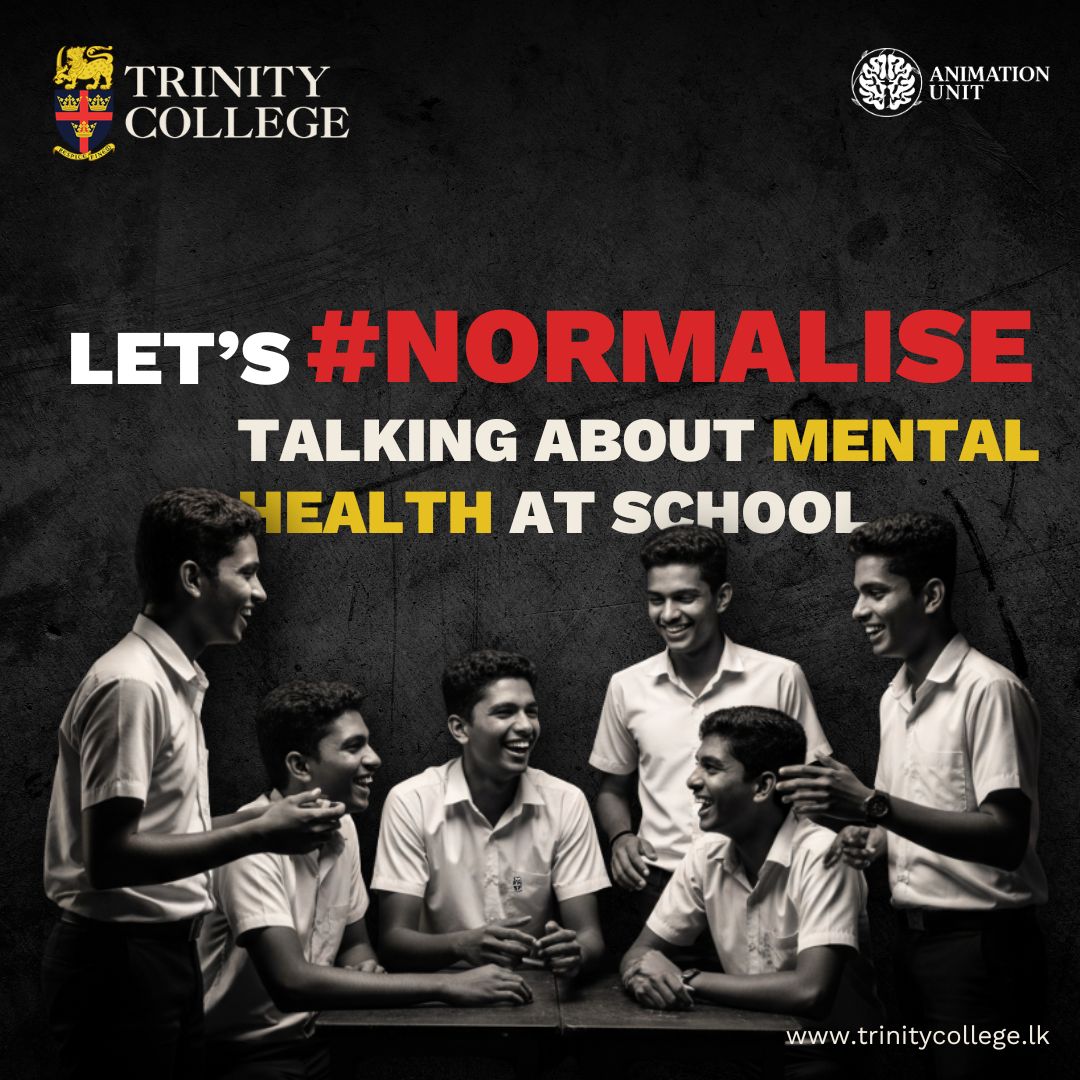
We must normalise emotional honesty in our schools and homes. We must make it as natural to say “I’m not okay” as it is to say “I have a fever.” This begins with the adults — teachers who notice when a student seems withdrawn, parents who check in with their children beyond academics, and friends who are brave enough to ask, “How are you really doing?”
Every small moment of care counts. A kind word can restore hope. A listening ear can prevent tragedy.
Recognising the Signs
Sometimes, students don’t know how to ask for help. Sometimes, their pain shows in quiet, subtle ways. As educators and parents, we must learn to observe without judgment and intervene with compassion.
Watch for:
- Sudden mood changes or irritability.
- Withdrawal from friends or favourite activities.
- Difficulty sleeping, eating, or concentrating.
- Frequent unexplained physical complaints.
- A drop in motivation or self-confidence.
These are not signs of weakness — they are signals of distress. Responding early, gently, and consistently can make all the difference.
The Role of Parents and Teachers
Supporting mental health is not the job of counsellors alone. It requires a whole-community approach — one that blends awareness, empathy, and accessibility.
For teachers, it begins in the classroom: creating an environment where students feel safe to express themselves without fear of being labelled or dismissed. For parents, it means being present — not just at report-card time, but in the everyday moments where your child might be struggling to find words for their feelings.
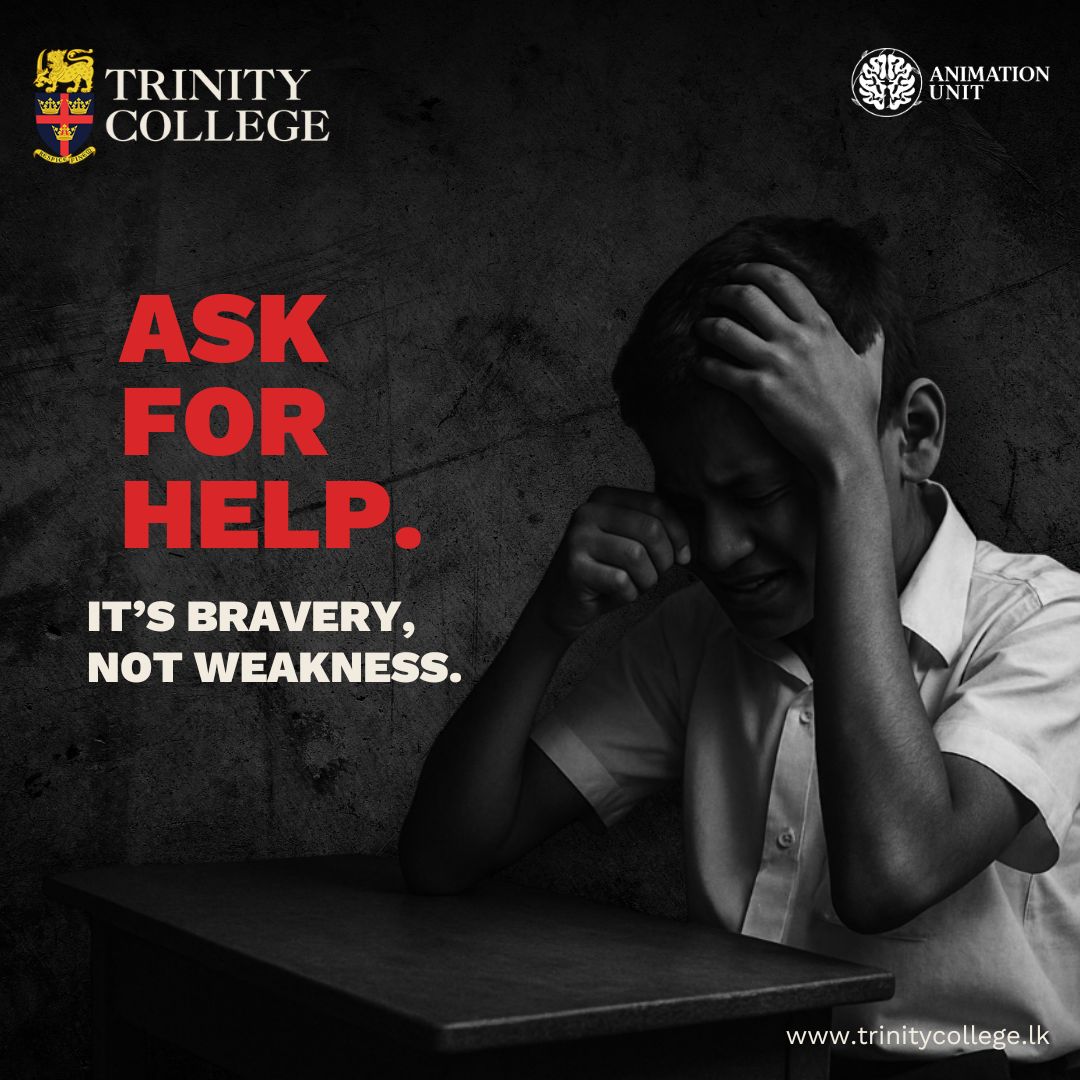
For students, it means realising that asking for help is not weakness — it is strength.
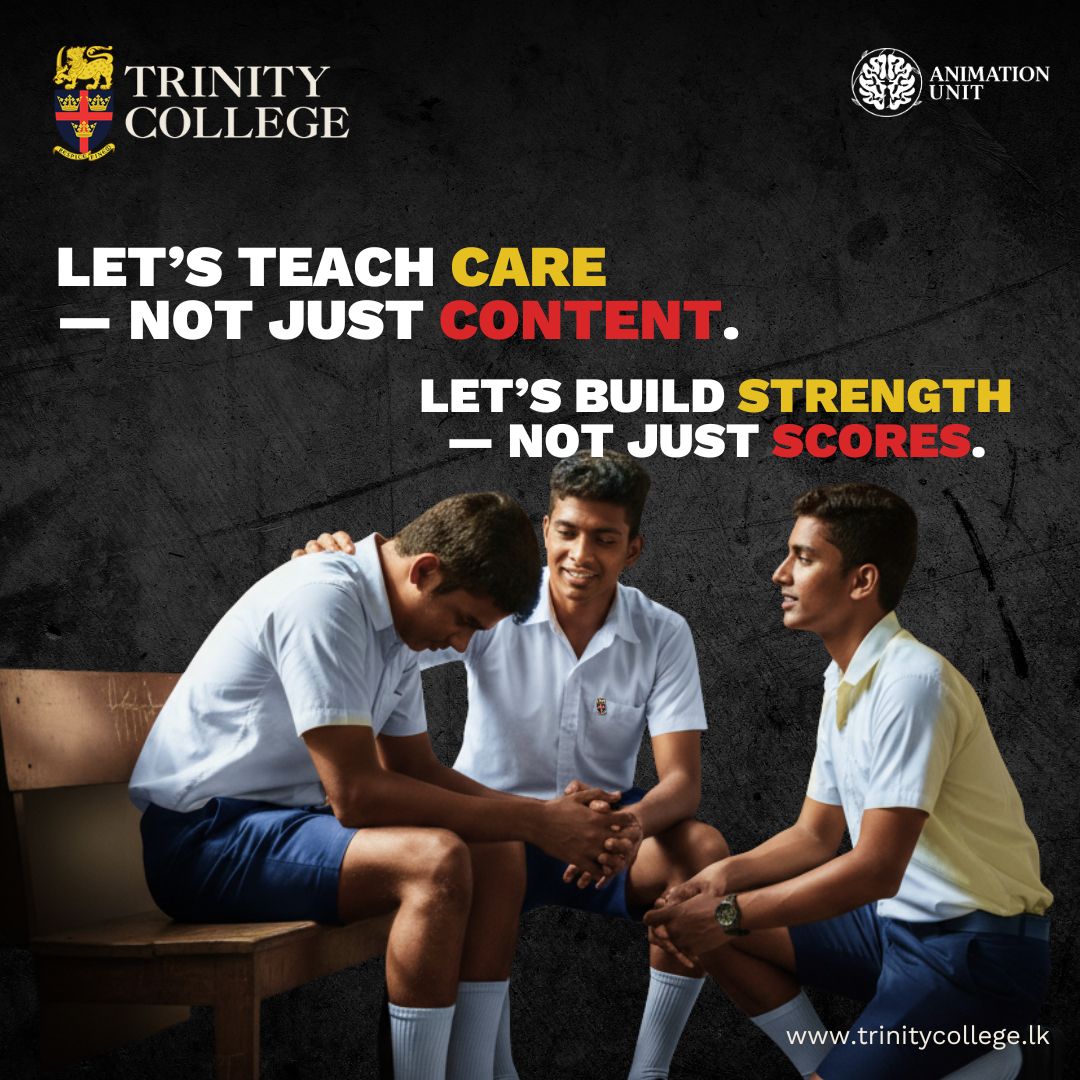
When we shift from lecturing to listening, from correcting to connecting, we build a culture where wellbeing and learning go hand in hand.
The Trinity College Animation Unit — A Safe Space to Talk
Trinity College Animation Unit was established with this very belief — that every student deserves a space to feel heard, valued, and supported.
The Unit functions as the College’s counselling and wellbeing division, staffed by trained professionals in psychology and counselling, covering every section of the school. Students can reach out confidentially, seek one-on-one guidance, or take part in sessions that promote emotional literacy, resilience, and mindfulness.
The Unit also works with teachers and parents to build awareness — helping the community recognise signs of distress, respond with sensitivity, and break down the stigma around mental health. Because true education is not just about shaping scholars — it’s about nurturing whole, balanced, and compassionate human beings.
Building a Culture of Care
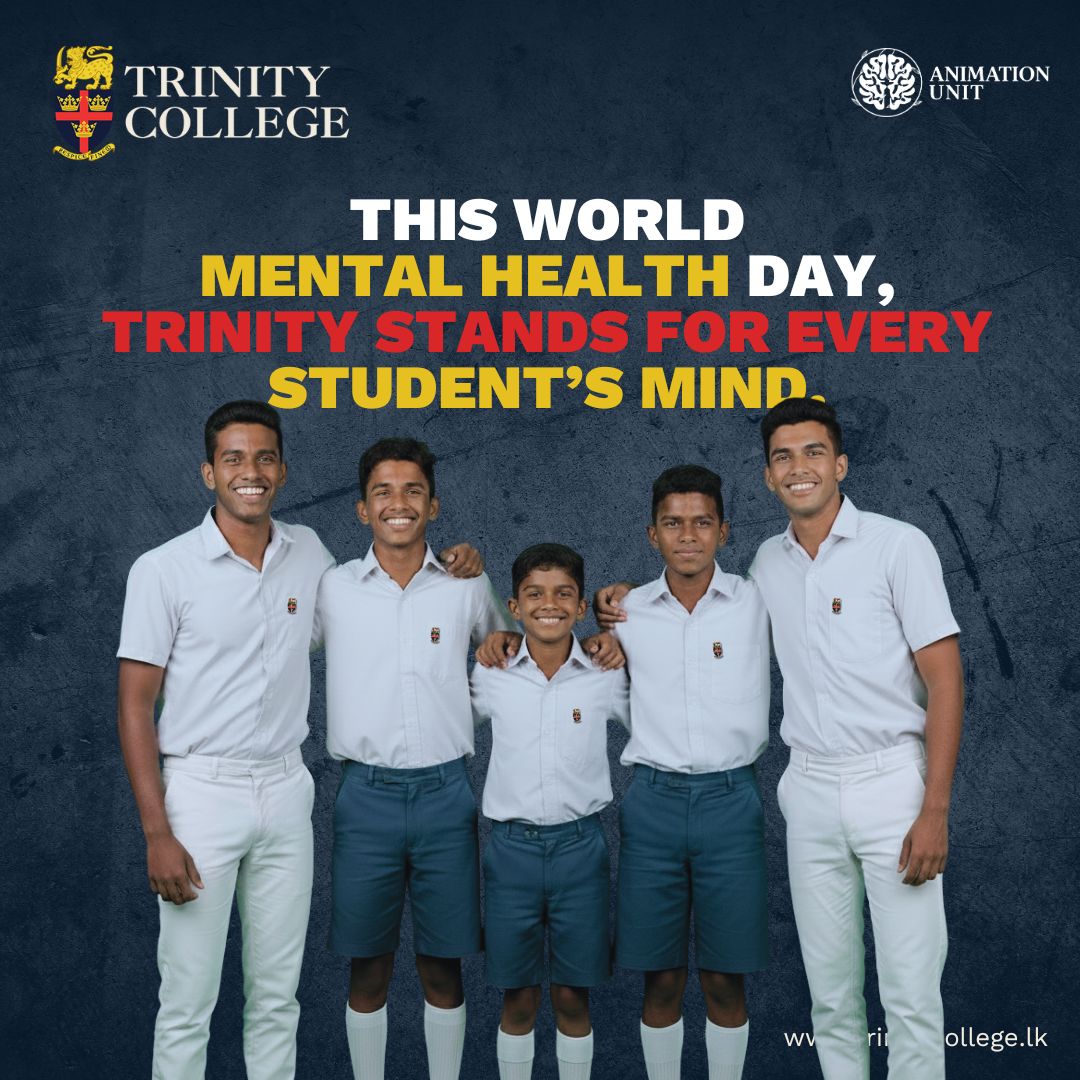
At Trinity, we are committed to building a culture that treats mental wellbeing with the same seriousness as physical health and academic growth. This commitment is not limited to a single day — it’s a continuous promise.
When a student walks through our gates, we want them to feel they belong — not just as learners, but as individuals who are seen, heard, and valued. We want parents to know that support exists. We want teachers to feel equipped to guide, not just grade.
Because mental health is not a weakness. It is part of what makes us human — complex, emotional, and beautifully capable of healing.
A Shared Commitment
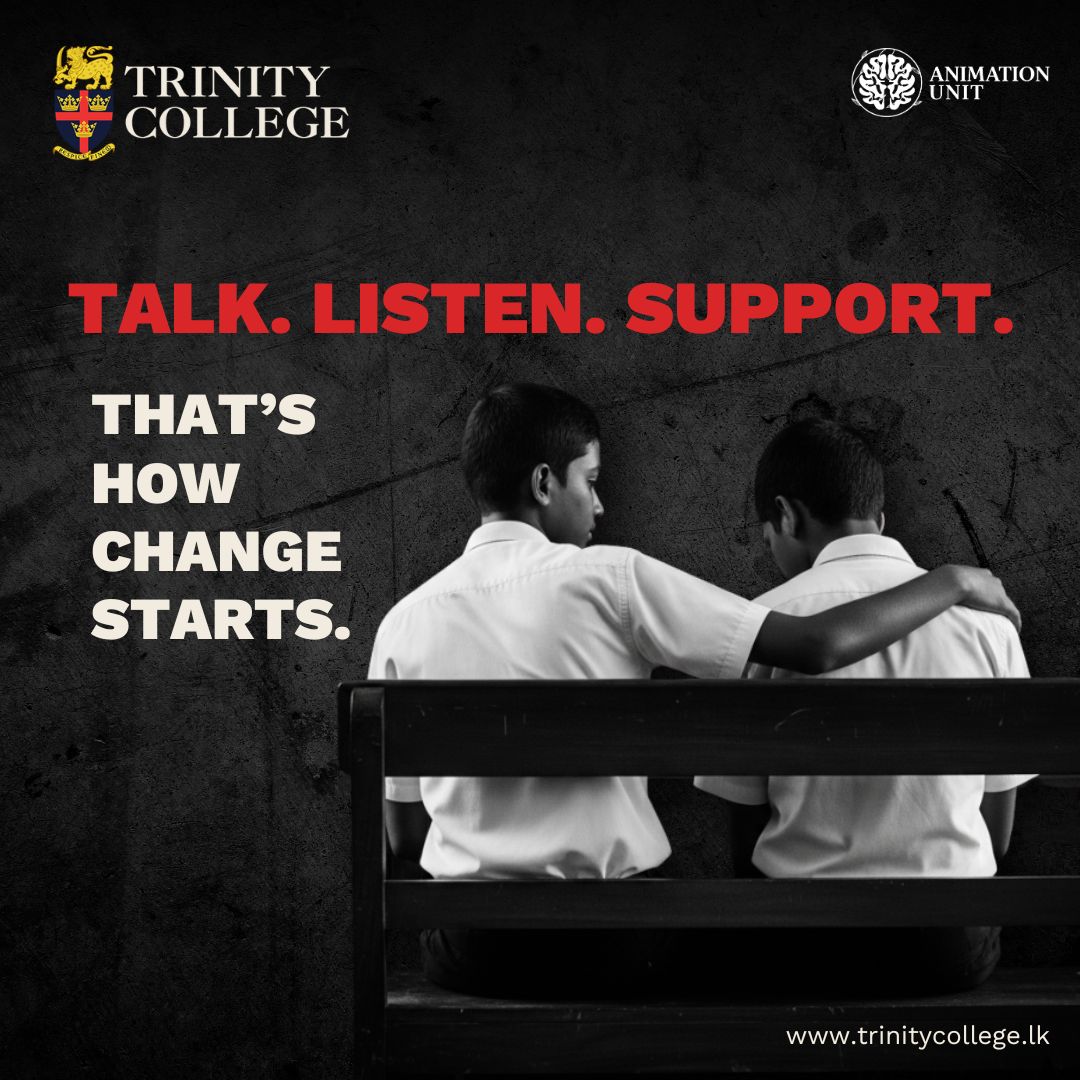
At Trinity, our message is simple: Let’s talk. Let’s listen. Let’s support. That’s how change starts.
Caring for mental health reflects the very values we live by:
- It takes Integrity to speak honestly about what we feel.
- It takes Service to look beyond ourselves and care for others.
- It takes Excellence to give our best not only in academics, but in kindness and understanding.
- And it takes Resilience to rise each time life tests us — stronger, wiser, and more compassionate.
As we recognise the importance of mental health, we reaffirm what our motto has always reminded us — Respice Finem — Look to the End. Let us look beyond the moment, beyond the struggle, and towards the full and flourishing lives of every young Trinitian we nurture.
Visit: www.trinitycollege.lk/animation-unit
Article by Matthew Francis (Animation Unit)