








Article by Ravindu Herath (Student Archivist – Trinity College Archives & Museum Team)
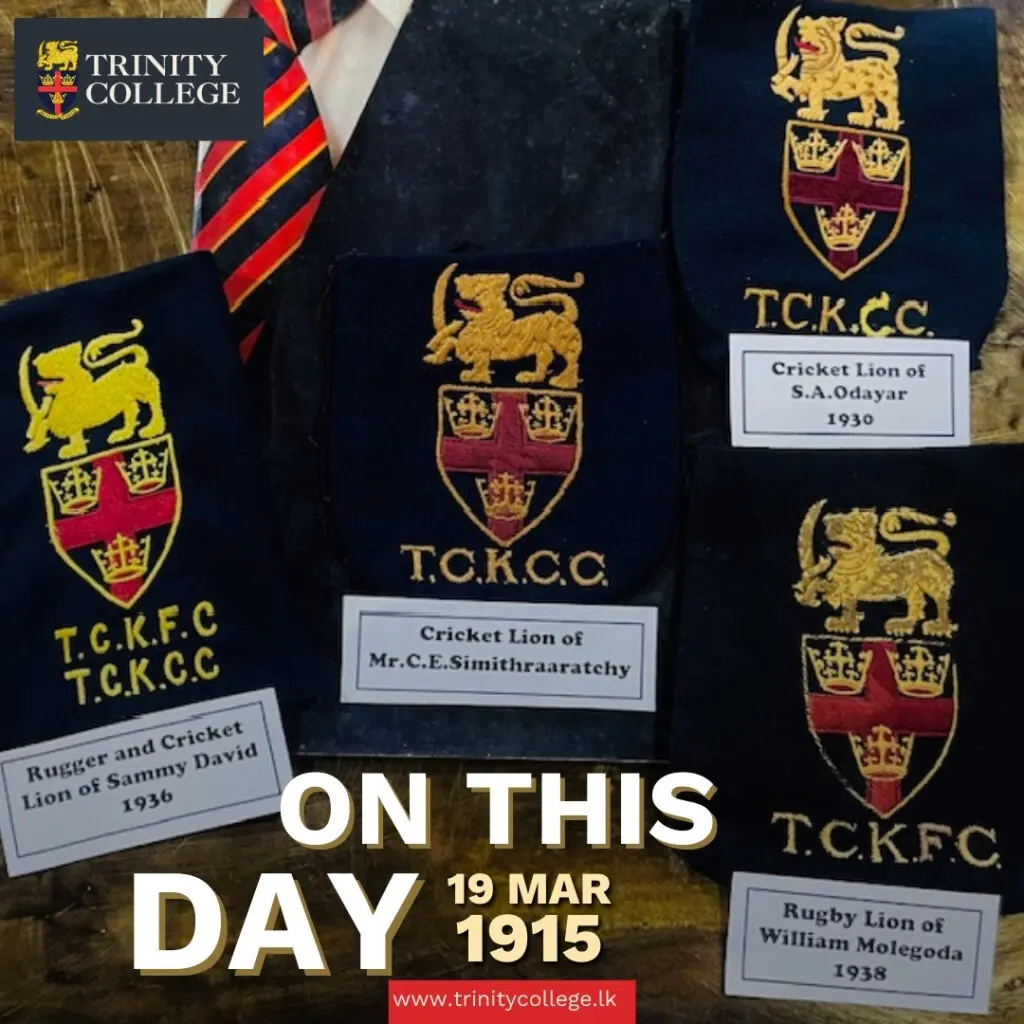
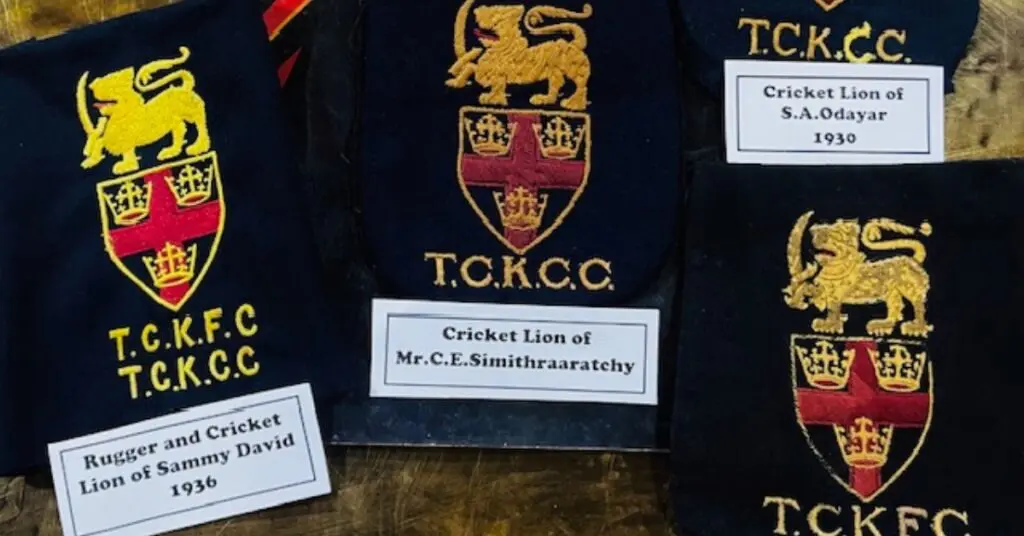
On 19 March 1915, Trinity College, Kandy, marked a significant moment in its sporting history with the inaugural awarding of the College Lion, the highest honour in sports at Trinity.
Among the first recipients were sportsmen such as R. Ondatje, Richard Aluwihare, W. P. Beligammana, H. C. Inman, and M. P. Kallora, who had demonstrated both skill and commitment. The Cricket Eleven received the highest number of awards, highlighting the strength of the game at the College at the time.
Awarded on the recommendation of the Sports Committee, the College Lion award recognised boys who, at the time, had achieved distinction in athletics or contributed meaningfully to the standard of sport at the College. The first presentation took place when the Principal formally announced the recipients, establishing a tradition that continues to hold deep significance.
Lions were awarded across a range of disciplines, including Cricket, Rugby, Boxing, Shooting, Marching, Military Efficiency, and General Efficiency in Sports. In total, eighteen Lions were awarded on that day, reflecting the breadth of sporting activity at Trinity during this period.
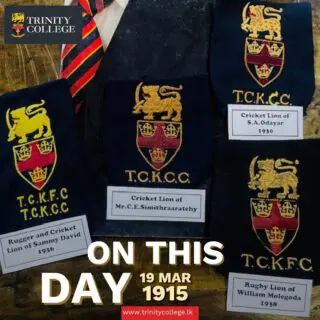
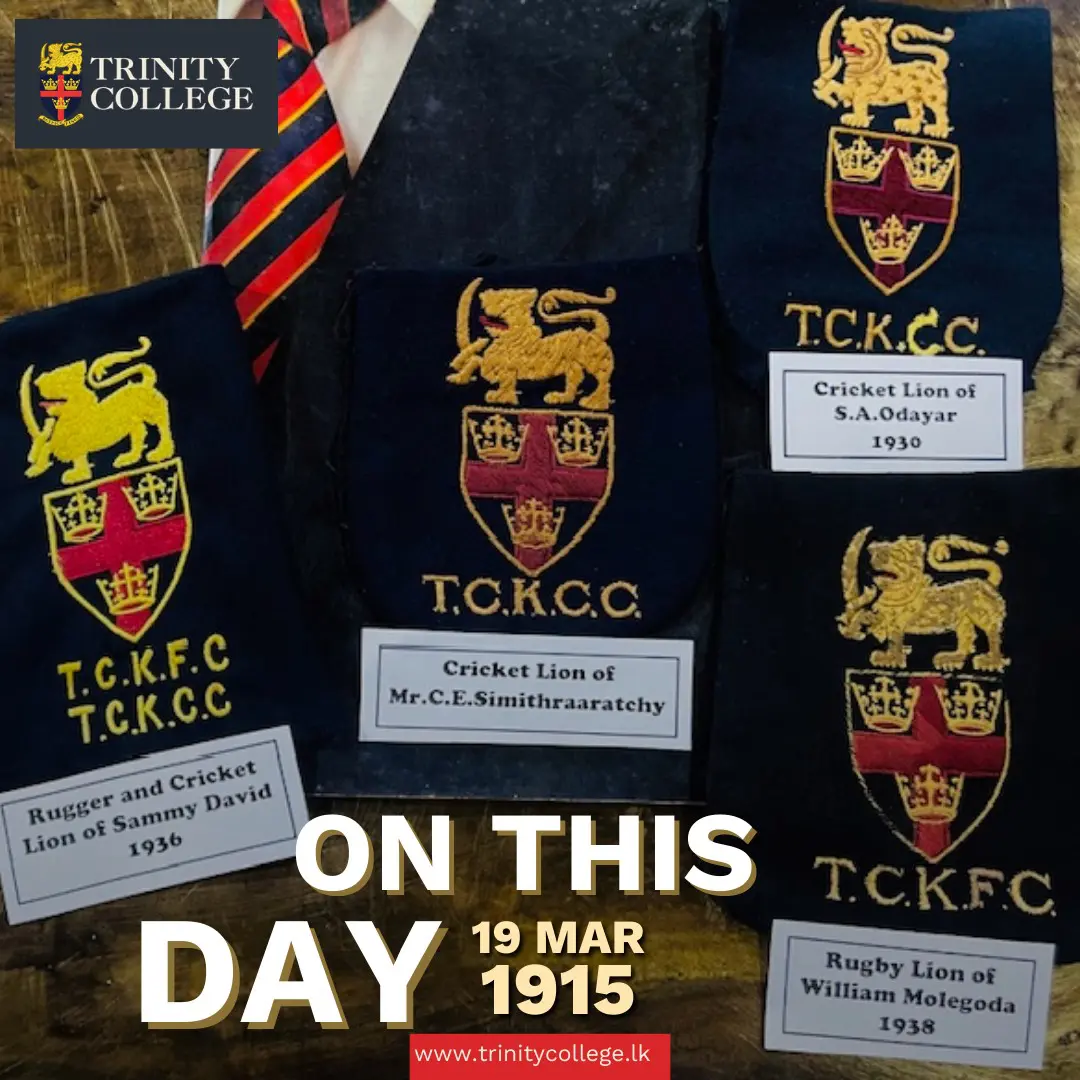
This symbolic award is presented in the form of a cloth bearing the College crest, which recipients may stitch onto their blazer. At the base of the crest are the initials of the sport for which the Lion has been awarded, for example, ‘T.C.K.F.C.’ for Trinity College Kandy Rugby Football Colours and ‘T.C.K.C.C.’ for Trinity College Kandy Cricket Colours. It was also observed that similar recognition might be extended to excellence in academic pursuits, such as achieving a First Class in the Cambridge Locals. This reflects an early understanding that achievement at Trinity should not be limited to the playing field alone.
The introduction of the College Lion established a tradition that remains one of the most respected honours at Trinity, representing discipline, consistency, and contribution to College life.
Today, we remember these early recipients not only for their achievements, but for setting a standard that continues to guide Trinity students. Whether in sport or in the classroom, the values they upheld remain central to the life of the College.
Source: from the Trinity College Kandy Archives & Museum