









By Vidath Kumarasinghe, Mahiru Kandewela & Newon Weerasinghe (Nature Club)
On 2 August 2025, the members of the Trinity College Junior School Nature Club set out on a much-anticipated field trip that blended history, ecology, and discovery. The day’s journey took them first to the Menikdena Archaeological Site and later to Popham’s Arboretum, creating an experience that linked Sri Lanka’s cultural heritage with its natural treasures.
The group gathered at the Junior School gate in the early morning, with teachers, naturalists, and 21 eager students ready to set off. After prayers, the journey began, and spirits were high as the bus made its way towards Dambulla.
Menikdena Archaeological Site
The first stop was Menikdena, an ancient temple complex by the Menikdena tank, built during the reign of King Kithsiri Meghavanna. Before exploring the ruins, the students enjoyed breakfast and took a short nature walk along the reservoir, spotting many birds including little egrets, spot-billed pelicans, black-headed ibis, and brahminy kites.
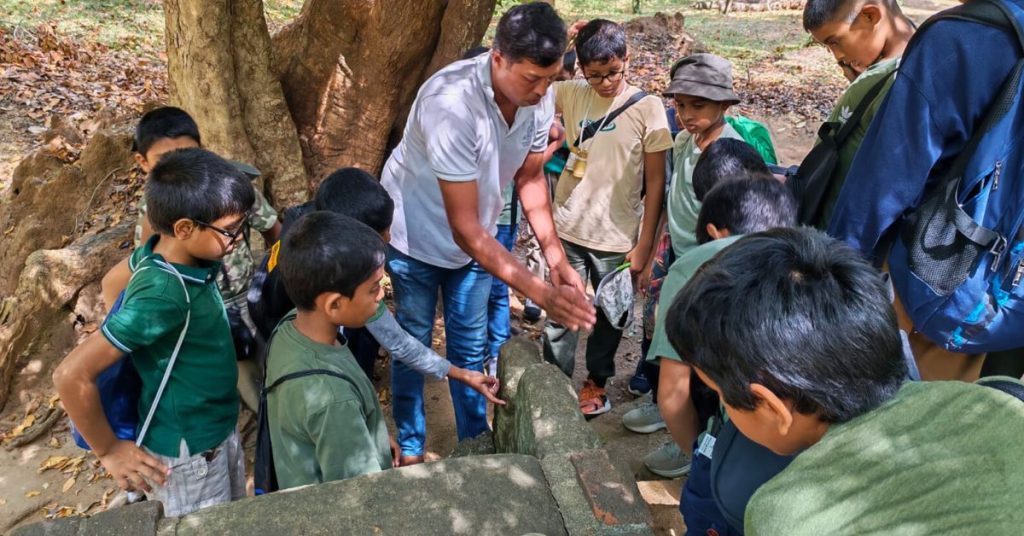
Guided by a site officer attached to the Department of Archaeology, the students explored stone pillars, inscriptions, and the remains of a stupa. One inscription recorded a gift of five kalandas of gold to purchase paddy fields for the temple. The group also saw partially excavated ruins, including the remains of a Buddha statue. Along the way, they were introduced to fruits such as koon, which they tasted with delight.
The visit reminded the Nature Club how history, culture, and environment have always been closely connected.
Popham’s Arboretum
After leaving Menikdena, the group travelled to Popham’s Arboretum, established in 1963 by Sam Popham, a British naval officer. Once scrub jungle and abandoned chena land, it was later managed by the Institute of Fundamental Studies and has grown into a sanctuary of biodiversity.
On arrival, the students watched a short video presentation on the arboretum’s history before sharing lunch together. A tour led by a naturalist took them through shaded trails rich with wildlife. They encountered bats, including false vampire bats and horseshoe bats, and learnt about the rare lorises that make the arboretum their home. Among the highlights was a towering 400-year-old ebony tree, standing as a living witness to the passage of centuries.
The young naturalists were also shown places where pangolins and other elusive species had been sighted. The arboretum’s peaceful pathways allowed them to appreciate the beauty and fragility of nature.
A day of discovery
By evening, the bus rolled back into College with tired but happy students, each carrying memories, knowledge, and even a few treasured peafowl feathers to share with their families. The trip was more than just an excursion: it was a reminder of the importance of preserving both history and nature for the future.
The Nature Club looks forward to more such opportunities where students can learn, explore, and develop a deeper appreciation for the world around them.