






Review by Kenula Ekanayaka (Biology Student, 2026 A/L Batch, TCK)
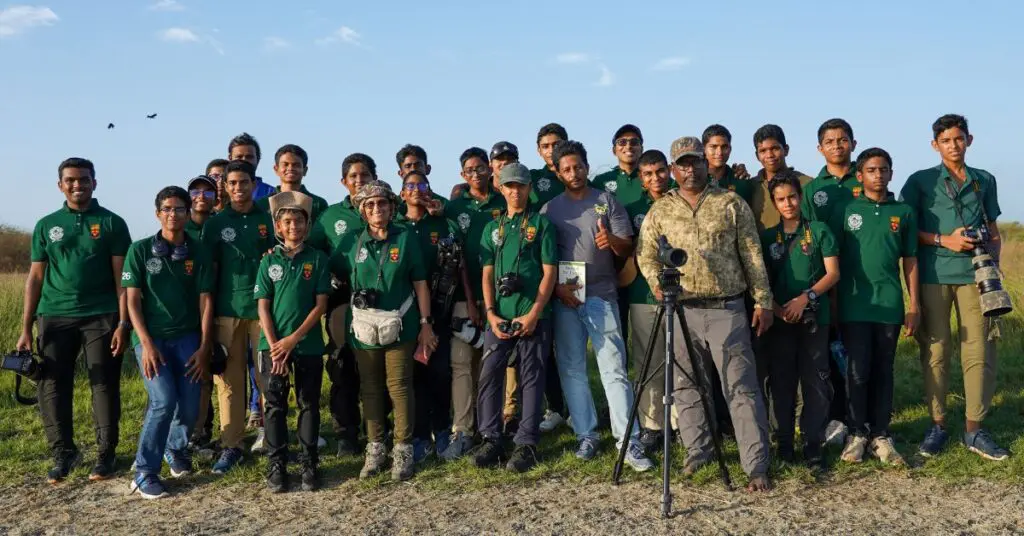
On the 19th and 20th of November 2025, our batch undertook a field visit to the Anawilundawa Wetland Sanctuary and Wilpattu National Park. This visit formed an important part of our Environmental Biology practical learning and offered an opportunity to study wetland ecosystems, dry-zone forests, and wildlife behaviour firsthand. What we had previously encountered in theory was brought to life as we observed ecological interactions in real time.
Our study session at Anawilundawa focused on wetlands and biodiversity, with the wetland functioning as a vibrant outdoor classroom. A dedicated research team working on mangrove conservation guided us through the identification of mangrove species and explained key ecological concepts such as plant adaptations and the importance of blue carbon in climate change mitigation. We also explored salt marsh habitats and learned about ongoing research on managing invasive plant species. Observations of various waterbirds and visible signs of agricultural runoff and encroachment highlighted both the ecological richness of the wetland and the pressures it faces from human activity.
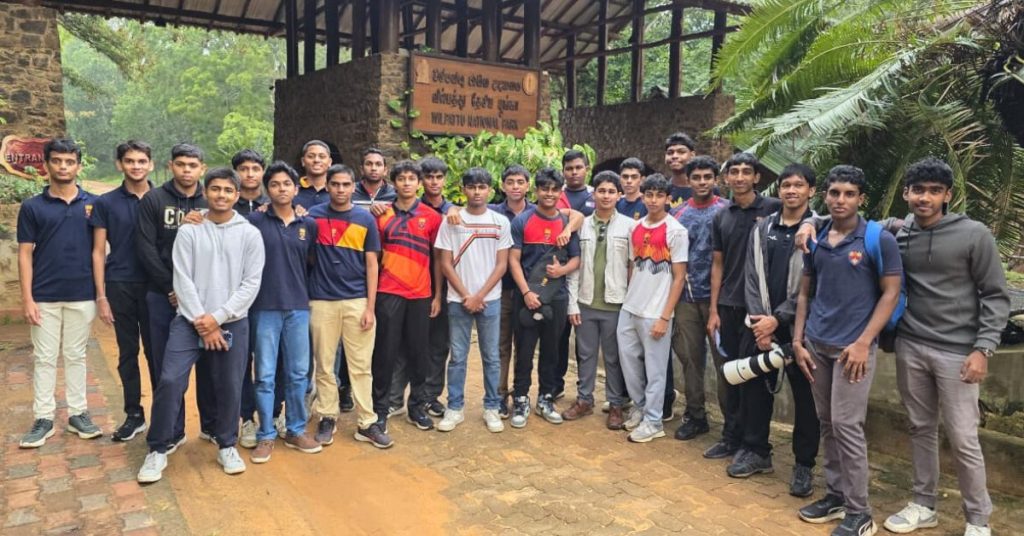
The second day took us to Wilpattu National Park, where we began our safari at dawn. The early morning light created ideal conditions to observe animal behaviour within the dry monsoon forest. We recorded a diverse range of species, including spotted deer, water buffalo, mugger crocodiles, monitors, and Indian hares. Avian life was particularly abundant, with sightings of the crested serpent eagle, grey-headed fish eagle, changeable hawk-eagle, little cormorant, Indian peafowl, green bee-eater, woolly-necked stork, painted stork, white-throated kingfisher, Malabar pied hornbill, and the Sri Lankan junglefowl. A major highlight of the field visit was an extended close-range sighting of a leopard, which offered an invaluable opportunity to observe predator behaviour and movement in a natural setting.
This field visit fulfilled the practical requirements of our Environmental Biology syllabus and deepened our appreciation of Sri Lanka’s diverse ecosystems. It strengthened our understanding of the relationship between scientific research, conservation efforts, and the protection of natural habitats. More importantly, it reminded us that learning thrives when the classroom expands into the natural world.
Special Thanks
This field visit was supported by the guidance and generosity of several individuals whose efforts greatly enhanced our learning experience. We express our sincere appreciation to Prof R. M. S. Bimalka Kumari Ranasinghe and Prof Sevvandi Jayakody for coordinating the academic aspects of the programme and for connecting us with the scientific teams whose expertise added substantial depth to our study of wetlands and biodiversity.
We extend special gratitude to the Anawilundawa Scientific and Research Team. Ms Waruni Tissera, Ms Hashini Prabodha, Ms Dhananji Wijerathna, Mr Kinastan Mathiyalakan, and Mr Mohammed Hifly provided comprehensive explanations, hands-on demonstrations, and valuable insights into their ongoing research on mangrove conservation. Their dedication to environmental science and their willingness to share knowledge enriched the field visit in meaningful ways. We also acknowledge Mr Manjula Amararathna of the Department of Wildlife Conservation, whose support enabled our access to both Anawilundawa and Wilpattu.
We further thank Mr Prabath Gunarathne for his coordination and the Principal, Vice Principal, and Co Vice Principal for approving and encouraging this academic initiative. Their support ensured that the field visit was well organised and educationally impactful. Finally, we are grateful to our parents for enabling our participation and supporting our academic journey.