GENERAL ARTICLES

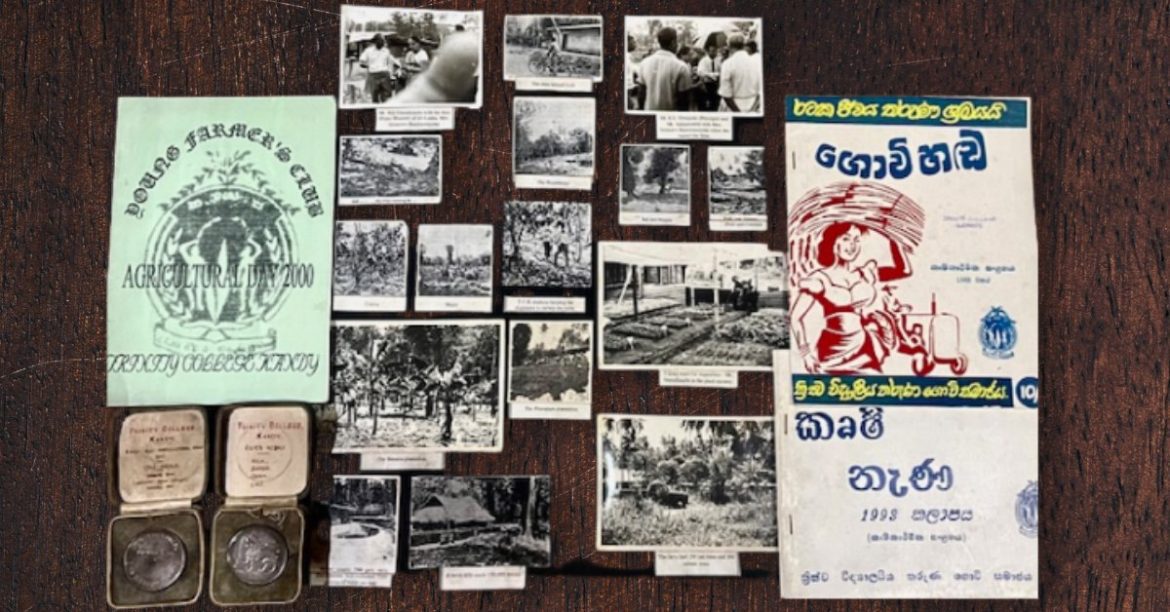
On 30 October 1925, a seed was planted in the rich soil of Trinity College, one that would grow into the Young Farmers’ Club. What began as a small effort to introduce students to the discipline of agriculture has flourished into a century-long tradition of nurturing the land and the values that come with it.  In its early years, six acres of College ground were transformed into a working farm through patience, dedication, and care. The students who toiled there learnt lessons far beyond the classroom: the dignity of labour, the value of the earth, and the satisfaction that comes from growing something with one’s own hands. Their efforts drew the attention of the Governor himself, who praised the initiative during a visit to the College.  Though the Club experienced periods of rest, much like the land between harvests, it never lost its vitality. Each revival—in 1952 and again in 1971—brought renewed energy and purpose. Under the guidance of devoted patrons such as Mr McLeod Campbell, Mr J. N. Thomas, and Mr W. Sinnathamby, the Club expanded its fields of activity, adding piggery, dairy, and large-scale cultivation. These ventures not only strengthened agricultural understanding but also instilled in students a sense of environmental responsibility and respect for nature’s gifts.  The spirit of the Young Farmers’ Club continues to live on in the values it cultivated: a respect for the earth, a willingness to work hard, and a commitment to serve with humility. Its legacy remains deeply rooted in the soil of Trinity College, inspiring generations to care for the land and for one another. Article by: Trinity College Archives & Museum Team
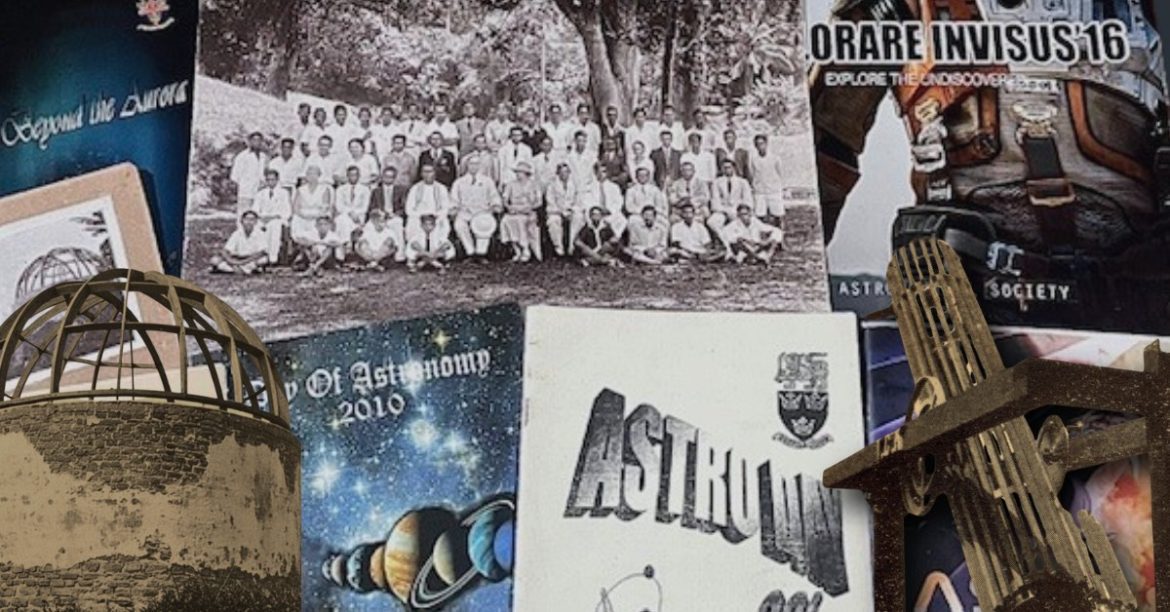
97 years ago, on 22 October 1928, a group of visionary students at Trinity College, Kandy, founded the Astronomical Society. What began as a shared curiosity for the stars soon evolved into one of the College’s most enduring and pioneering student-led societies.  The first Secretary of the Society was P. R. Perera, while the then Principal, Rev. McLeod Campbell, served as its President—underscoring the importance placed on scientific exploration even at that time. The Society’s primary aim was to encourage and facilitate the study of astronomy among students  Among those who contributed significantly to its founding was Mr D. A. Devendra B.A., who was later honoured with a fellowship from the Royal Astronomical Society, a rare distinction that reflects his influence and commitment.  While early meetings were centred on lecture papers, the Society soon aspired to greater heights—quite literally. Within a few years, they began work on an observatory. The construction of the observatory’s mirror was entrusted to Rev. W. F. G. Ellison, Director of the Armagh Observatory in Ireland. The foundation stone was ceremonially laid by Miss Mary Campbell on 19 June 1933.  Just eight months later, the telescope was completed and proudly exhibited in the same year. The observatory’s dome was constructed after the telescope had been installed. This observatory—described at the time as the largest in Ceylon—was officially declared open by Sir Graeme Tyrell, Chief Secretary of Ceylon and Acting Governor.  In 1952, the observatory suffered a major setback when a falling tree severely damaged the telescope. Despite multiple repair efforts, its peak period came to a premature end. Yet, the spirit of discovery continued. Students remained engaged, observing the skies and keeping alive the legacy of those who had once dared to build a window into the cosmos.  Today, as we mark 97 years since its founding, we remember the Astronomical Society with deep gratitude and pride. The passion of those early pioneers still echoes across the generations, inspiring Trinity students to look upwards and think beyond.  Article by: Trinity College Archives & Museum Team 
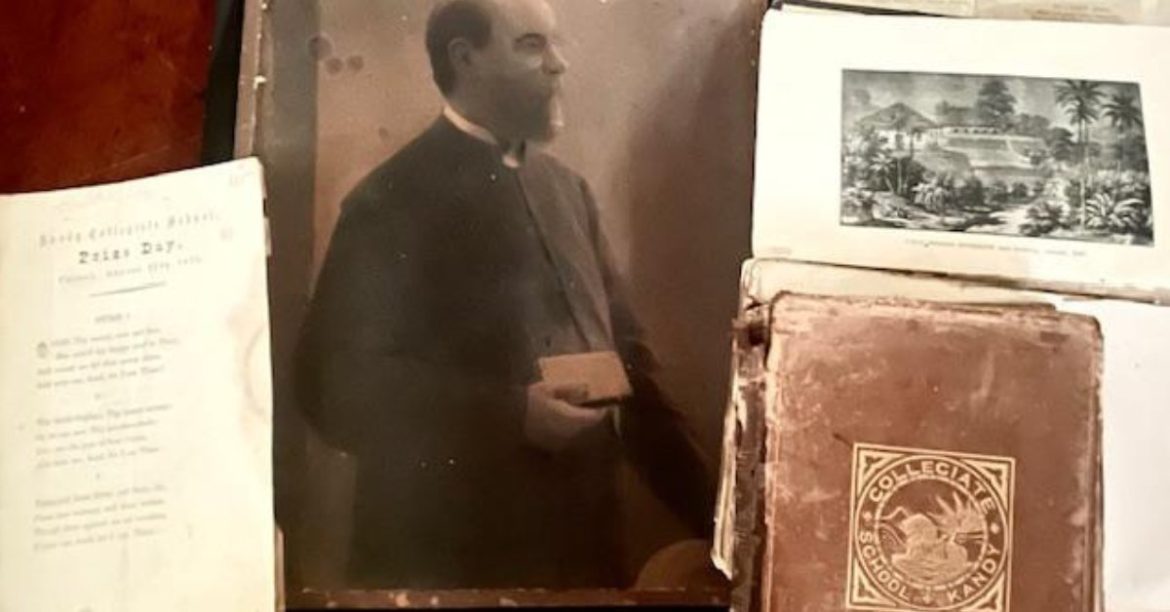
16th October 1858 — On this day 168 years ago, The Kandy Collegiate School, known today as Trinity College, Kandy, was founded by Rev. Ireland Jones with the objective of reaching out to the sons of the Kandyan chiefs and bringing them under the influence of a Christian education. The school was in a flourishing condition during Rev. Ireland Jones’s time, and by 1860 there were sixty students on the roll. In the same year, Rev. Jones—who wished to devote his time entirely to evangelistic work—retired from the Kandy Collegiate School. He was succeeded by Rev. R. B. Tonge, under whose leadership the school began to decline in numbers and was eventually closed in 1863 or 1864. However, the Sinhalese chieftains of Kandy, and particularly the members of Holy Trinity Church, were persistent in their appeals to the Church Missionary Society (C.M.S.) for the reopening of the school. Their efforts were successful when, in early 1872, Rev. Richard Collins of St. John’s College, Cambridge—then Principal of the C.M.S. Syrian College, Cottayam, Travancore—was sent to Kandy to revive the institution. Rev. Collins secured the assistance of three capable men: With their support, he reopened the school on 17th January 1872 under the name Trinity College and Collegiate School, starting with forty to fifty boys. Very soon, the leading families in Kandy began sending their sons to this school, and by the end of that same year, there were 120 students on the roll. In early 1877, the latter half of the name was dropped, and from that time onward the institution was known simply as “Trinity College.” Article by: Trinity College Archives & Museum Team
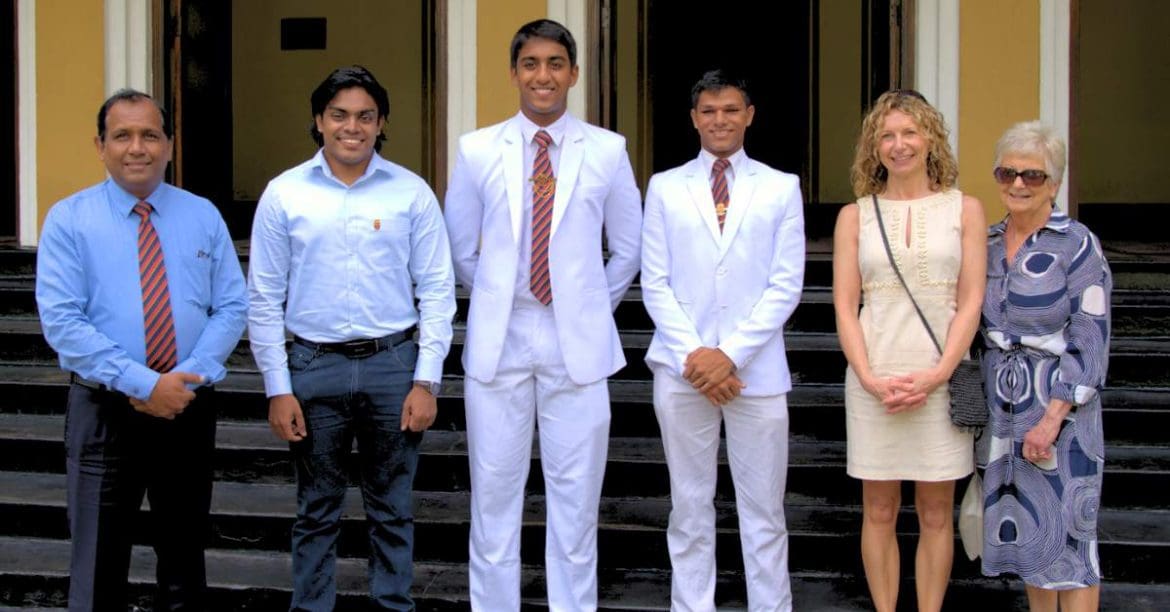
We had the distinct honour of welcoming Mrs. Nikki Blackhurst and Mrs. Alison Goddard — the great-granddaughter and granddaughter of the legendary Rev. Alexander Garden Fraser, one of Trinity’s most transformative Principals.  Their visit was both moving and memorable, offering a rare opportunity to connect with the living legacy of a visionary who shaped much of what Trinity stands for today. Rev. Fraser, who served as Principal from 1904 to 1924, was not only a pioneering educator but also a reformer who championed holistic education, student leadership, and inclusive learning long before such ideas were widely embraced in Sri Lanka.   The day began with a guided tour across key locations that still reflect Rev. Fraser’s influence and vision. This included the College Archives, the Milton Senanayake Memorial Library, the iconic Fraser Block, Gaster Block, Alison House, and the Chapel. A few Prefects and students had the privilege of joining the visit — listening to personal stories and asking thoughtful questions.  In the midst of the visit, the guests were offered light refreshments and traditional Ceylon milk tea at the College Dining Hall — a warm moment shared in true Trinity spirit.  What made the day especially meaningful was the exchange of stories — as Mrs. Goddard shared personal memories, letters, and anecdotes passed down through their family, the spirit of Rev. Fraser came alive in new and profound ways.  We are deeply grateful to Nikki and Alison for their visit, and for helping us reconnect with the roots of our legacy in such an intimate and inspiring manner.   This occasion serves as a reminder of the enduring impact of those who came before us — and the importance of preserving and celebrating their stories for generations of Trinitians to come!  SA 
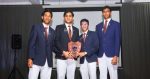
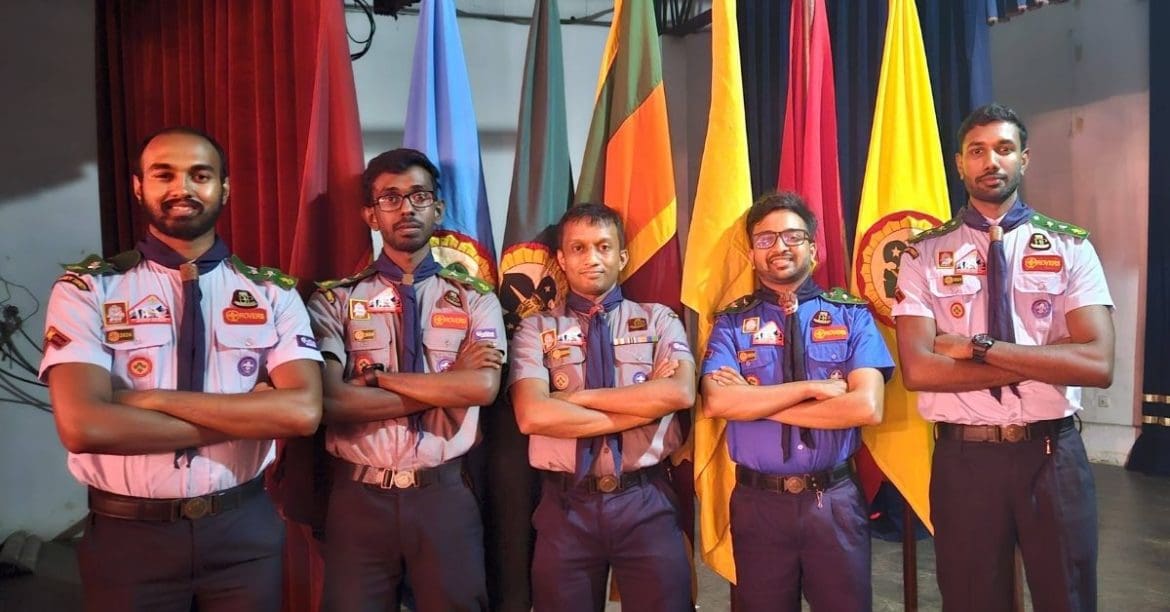
The Trinity College Rover Scout Crew became the first ever crew in the history to produce Baden Powell (BP) Awardees from all three sections of scouting namely, Explorer Scouting, Sea Scouting and Air Scouting. The Baden Powell Award is the highest award which a Rover Scout can achieve and can be worn on his uniform for his entire lifetime.   The following Rovers were honoured with this prestigious award at the closing ceremony of the 35th National Rover Scout Meet held in December 2024:  These awardees and the Rover Scout Master, being grateful for the continued support and encouragement they receive from the Principal of Trinity College Kandy, Rev Fr Araliya Jayasundara OSB as the Patron of Scouting at Trinity, paid a courtesy call on him on 20th February 2025.  Rover Scouting in Trinity was initiated in the year 2007 by the then Scout Leader and Rover Crew Leader Ravindra Tammita who became the first BP Award winner from Trinity in the year 2009. Since then, there have been no recipients of this award until after 15 years, in 2024,   Furthermore, the Trinity Rover Crew produced the highest number of BP awardees in Sri Lanka during this year while ensuring the highest number of BP awardees from a single crew since 2005.   Kavindu Gunatunge became the first Scout from Trinity to achieve the highest awards from all 3 sections by winning the Gold Star as a Cub Scout, President’s Award as a Scout and the BP Award as a Rover.   All the above five BP awardees are currently working towards their Wood Badge, the highest award a Scout Leader can achieve and is considered as the Degree in Scouting.  The Trinity Rovers have been a huge strength to the entire scout group since its inception and has supported other sections of the group in every way possible including Trinity’s Signature Event, “Journey Through Nature” Besides, All Island Scout Exploration Competition which is held every four years since 2004 is known all over the Sri Lankan Scout Community as the Olympic Hike of Scouting.  Rover Scouting is open for any youth who wishes to groom himself in all aspects in life and does not need any prior scouting experience to join except for his pure interest. Hence, we would like to encourage any Trinitian who is over 18 years of age to join the Trinity Rover Crew if they wish to get enriched with the essence of scouting.  Trinity stands as one of the very few Complete Scout Groups in the country by having all sections, Cub Scouting, Junior Scouting, Senior Scouting, Rover Scouting and the newly formed Singithi Scouting. Under the patronage of the Principal Rev Father Araliya Jayasundara and the guidance of Group Scout Master and Co-Vice Principal Mr. Ananda Marasinghe, Trinity Scouting has marched forward into greater heights. Trinity Scouting celebrated 110 years of scouting in the year 2024 and in par with this milestone as well as the production of five BP awardees, the Rovers are in the process of organizing a unique project under the name “Summit Bound” where they intend to climb the highest 50 mountains in Sri Lanka for a worthy cause while producing a documentary video which will benefit all the adventure lovers for sure.   Stay Tuned, Be Prepared and Look to the End.    
Sermon by Master M. A. S. Shelomith (Middle School) Good morning to all of you. Today I will be talking to you about, THE WORD OF GOD “All Scripture is God-breathed and is useful for teaching, rebuking, correcting and training in righteousness, so that the servant of God may be thoroughly equipped for every goo work.” 2 Timothy 3:16,17. The phrase Word of God is used to describe or identify the Bible, and the collection of 66 books written by over 40 authors, over a period of fifteen hundred years. And very importantly all scripture is God-breathed. It is called the Word of God because we believe God is the author of the Bible. Everything in the Bible is exactly what God wanted to communicate with the humanity. In 1 Thessalonians 2:13 it describes the Bible as the Word of God, many qualities of the scriptures proves that the word is divine and given by God though it was revealed to and written by chosen men of God. The stylistic beauty and majesty of Scripture is the unity of the Bible’s teaching expressed through a diversity of authors and perspectives, the biblical presentation of the one way of salvation and the power of the Bible’s doctrine to save and to sanctify sinners. Also, the Bible claims the Holy Spirit of God is the one who can reveal the Word of God Because the authority of Word of God comes from God. therefore, the Word of God can’t be broken. God has revealed Himself to the world through His only begotten Son Jesus Christ our Lord. Jesus Christ Himself is also called the Word of God, “in the beginning was the Word, and the Word was with God, and the Word was God” (John1:1). This suggests that Jesus is not only a messenger of God’s Word but that He is the very essence of that Word. Jesus has spoken the Word with the authority that the Father has given to Him and His apostle and prophets as well, and Jesus never spoke a Word by His own because the authority matters. Everything written in the Bible has its purpose and it will fulfill the task it has intended for.  Scripture is the only transcendent and inerrant authority by which we may know what God’s will is for our lives. The Bible also teaches us many things regarding every aspect of our human lives. In Hebrews 4:12 says “for the Word of God is living and active, shaper than any two-edged sword, piercing to the division of soul and of spirit, of joints and of marrow, and discerning the thoughts and intentions of the heart.” This passage suggests that the Word of God capable and powerful to cater all kinds of challenges we face in are day to day lives. First of all, the Word of God is live and active; remember Jesus said His words are Spirit and life. Therefore, the Word of God powerful to bring salvation to us and to give us a New Life. Also, its active to speak to anyone at any time who is willing to listen to the Word of God. Even the Christians pray according the Word and it’s working in our hearts. Moreover, the Word of God as a sharp blade which is capable to discern our inner motives and desires and it helps us distinguish right from wrong, true from false and godly and ungodly. It is possible to read the Word and yet fail to follow God’s will, therefore we mostly fall short from entering God’s rest and His best for our lives. That’s why God’s Word has been given to us so that we will be careful to read and obey what has been written in it. In addition, He has given us His word to lead us and to guide us, and to direct us. The Bible tells us that His Word has the power to strengthen those who are spiritually weary, in Matthew 4:4 Jesus said, “man shall not live by bread alone, but by every Word that comes from the mouth of God.” The intake God’s Word is necessary for each of us in order to be spiritually alive because the bread gives strength to our physical body in the same way the word of God strengthen our spirit the real part of us. God is a Spirit so we can’t know and worship Him unless we are spiritually alive. Also, we read in Romans chapter 10:17, ‘we grow in our faith by hearing the Word of God’, as we know faith is the substance that our relationship with God stands. We are saved through faith and we are to live our day-to-day lives by faith in God and His Word. What we have discussed up to now it’s just glimpse of many benefits of the Word of God. God has exalted His Words more than all His names; through that we understand the importance that the lord gives to His incorruptible Word, Jesus Christ and all the other godly men in the Bible the Word of God matters than anything else in their lives. How much more we need to crave for the Word of God, as the children to the pure milk. How much more we need to seek the Word of God as a treasure to keep in our hearts; and how much more we must honor and obey the Word of God in every aspect of our lives as it reveals the perfect will of God. We must not only hear and read the word but we must meditate and include them in our lives which will ultimately become a blessing. We can clearly see it in the bible verse which says, ‘Blessed rather are those who hear the word of God and keep it’. So, finally I would humbly request each and every one of you to give at least 10-15 minutes of your time to the word of God because
Article by KLF Wijedasa** During this Olympic year it is pertinent to remember one of our country’s greatest athletes Major Duncan White on his 23rd death anniversary (July 3). On his way to success, he had to glide over 10 barriers and not break them! 14th August 1948: Duncan White of Ceylon fixes his starting blocks to the track at the 1948 London Olympics. Original Publication: Picture Post – 4582 – Fastest Men On Earth – pub. 1948 (Photo by Picture Post/Hulton Archive/Getty Images) Duncan White was born on the 1st of March 1918 at Lathpandura a rural village 2km from Baduraliya in the Kalutara District. His early education was at Trinity College Kandy. He was the captain of athletics in 1936 when Trinity College won the John Tarbat Challenge Cup and the Jefferson Cup for the Relays. White won the 220yds establishing a new record, 120yds Hurdles and the Long Jump. He was awarded the Trinity Lion for Athletics. On leaving Trinity College, he joined the Medical Department as a Physical Training Instructor and represented the Department at the Government Services Meet. In 1937 he participated in the National Championships representing Ace Athletic Club he returned a time of 52.0 secs in September and further improved it to 50.4secs the same year. Running in the 440 yds Hurdles event he clocked 56.4 secs. In 1940 he returned a time of 56.0 secs in the 440yds Hurdle event at the National Championships. It took 20 long years to improve the record till Nimal Fernando of the CT & FC returned a time of 55.7 secs. In 1944 running for the Ceylon Army Duncan clocked 22.2 secs for the 200m, which was equalled by W. Wimaladasa of the Army in 1964. D.K Podimahathmaya had the privilege of erasing Duncan’s record of 22.2 by .1 of a second after 24 years. In 1938 he represented Ceylon at the British Empire Games held in Sydney in 1938. He was the only schoolboy in the team. He represented Ceylon at the first Indo-Ceylon dual meet held in Colombo in 1940 and at the second Indo-Ceylon Meet held in Bangalore. At the first Indo-Ceylon Meet, he won gold medals in the 400m and 400m Hurdles events and helped win the two relays. In Bangalore, he won a gold medal in the 400m hurdles and won a silver in the 110m hurdles. Ceylon’s Olympic Squad in 1948 After breaking records in the National arena he turned to the wider International arena. He was a member of the first Ceylon team to an Olympic Games. That was the 1948 London Olympic Games. There was a special significance for Ceylon as it was in the year 1948 that we gained Independence from the British Empire. Duncan White won the silver medal beaten by Roy Cochran of the USA by only 7/10th of a second. While Cochran established an Olympic Games Record, Duncan White too bettered the previous record. On the strength of his performance at the Olympic Games, he was awarded a Government Scholarship to follow a course in Physical Education at the prestigious Loughborough College of Physical Education. At Loughborough, he Captained the College for three consecutive years. During his period the College won the British University Athletics Championships. At the 1950 British Empire Games held in Auckland, New Zealand Duncan White won the gold medal in the 440yds hurdles event with a new British Empire Games Record which was only 3/5th of a second outside the World record. On completing his studies at Loughborough College he returned to Ceylon in 1951, took up the post of a lecturer at the Training College Maharagama. In 1960 he took up the post of Athletic coach for the schools of the Department of Education with the approval of the then Minister of Education E.A. Nugawela. He did yeoman’s service to the young athletes of the schools, especially the Central Schools. R.A.C. Hubert of Piliyandala Madya Maha Vidyalaya was one such athlete who did well in the 400m. I am personally aware that he had gone to Gamini Vidyalaya Benthota on three occasions. He also had helped Harris Manikkam at the Christian College Kotte athletic camps. There he had screened his final run in the 400m Hurdles at the 1948 London Olympics. C.W. Pitigala, as a sharp student at that time, had asked Duncan why he had looked back while fixing the blocks. He had commented on his observant nature and answered. “when I was nailing my starting blocks someone had shouted “Hey Ceylon you are late” So he had turn back and said “shut up” and nailed his blocks. While nailing the blocks he injured his finger. He ignored the injury and concentrated on the event. And the rest was history. It is a good lesson for our young athletes not to get ruffled for the slightest thing at the start of an event. In 1964, he left for Nigeria to take up the post of Senior Lecturer in Athletics at the University of Ibadu. Later he settled down in Nuneaton, Warwickshire. Duncan White was awarded the Member of the British Empire (MBE) in 1949 and the Helms World Trophy as the Most Outstanding Athlete in Asia. Duncan White married Angela Siebel and they had six children Nita, Marilene, Fiona, Daniel, Maxine and Christopher. His teammates to the British Empire Games held in Auckland New Zealand said that when Duncan White ran the last lap for Sri Lanka in the 4x400m Relay the whole stadium stood up and cheered him because it was a fantastic run. He had overtaken several runners and came fourth. Several officials had asked him why he had not entered for the 400m event. The late Cyril Gardiner, the then chairman of the prestigious Galle Face Hotel, as a mark of respect to Duncan White adorned his name on a plaque at the entrance to the Galle Face Hotel as a distinguished guest of the Hotel. It was at this Hotel that I had
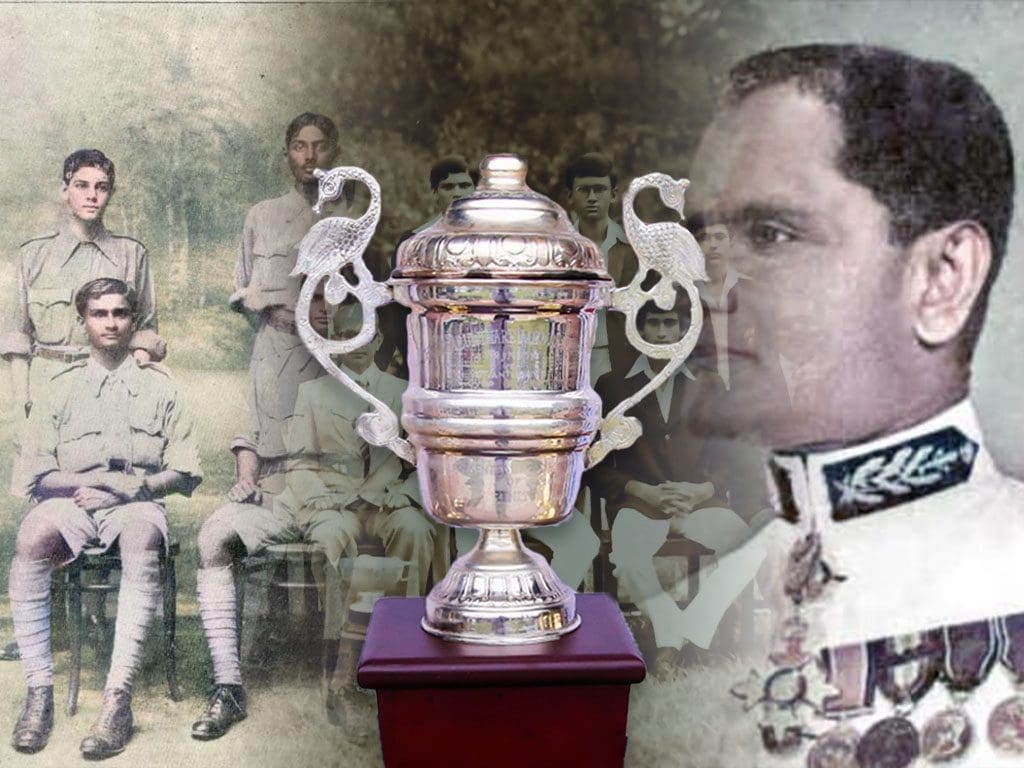
The annual schools One-Day cricket encounter the Kandyan community waits in anticipation, the battle between Trinity College and St. Anthony’s College will take place on the 29th of April, 2023 at the Asgiriya grounds. The 41st game of the series for the Sir Richard Aluvihare trophy, will be played under the distinguished patronage of Trinity’s 1st XI captain of 1990/91, Sujeewa Goonetilleke. Trinitians will be led by Rahal Amarasinghe and Antonians by Lahiru Abeysinghe. These two teams have faced each other in 40 one day matches, out of which, Trinity has won 19 (13 at Asgiriya and 6 at Katugastota) whereas St. Anthony’s have come out victorious on 17 occasions (11 at Katugasota and 6 at Asgiriya). One game ended in a tie with both teams making the same total and three games ended without a result due to wet weather (1993, 2003 and 2008). The series that commenced in 1980 at Asgiriya, under the captaincy of Angelo Liyanage (SACK) and former national star Ravi Ratnayake (TCK), has been a regular fixture over the last four decades except for 2001, 2020 and 2021. The Antonians kicked off the series in great style by winning the first nine of the eleven games, but Trinity has fought back since to take the lead, starting with consecutive wins in 1991 and 1992 by the narrowest of margins against formidable Antonian sides, and registering the latest win just last year. Trinity tipped to be the favourites to win this encounter, with their first innings win at the big match last weekend, has been dominating the series over the past seven games without being beaten since 2013 (with seven wins and a tie) with the last Antonian win coming only in 2012 under Kanishka Ranaraja. On that occasion, the Saints turned the tables on the much-colourful Trinity outfit led by Niroshan Dickwella to win by 10 runs. The only tie in the 40 games played to-date came in 2014 at Katugastota, when Trinity’s last batsman was run-out off the second ball of the last over. Apart from the tied game, there were many other close encounters, but none closer than the one-wicket wins registered by SACK in 1989 at Katugastota, and by TCK, just two years later, in 1991. In terms of victories by runs, TCK’s 2-run win in 2011 and their 3-run win in 1992, both at Asgiriya, are the narrowest of them all. The fixtures are played for the coveted Sri Richard Aluvihare Trophy, which was initiated to commemorate Sri Lanka’s first local Inspector General of Police, and a Trinity Cricket lion, who was also the Senior Prefect in his time. Incidentally Sir Richard fought at the Battle of the Somme under service no. 9289 in the 1st World War with 04 other Trinitians. After the war, Richard Aluwihare returned to Ceylon and joined the Ceylon Civil Service, reaching the rank of Officer Class One. He was Government Agent for the North Central Province and the first Ceylonese Inspector General of Police. Knighted in 1948 to become Sir Richard KCMG, CEB, he also served as Ceylon’s High Commissioner to India from 1957 to 1963. Sir Richard passed away on December 22, 1976, just 4 years before the annual cricketing encounter was initiated. Review by Lalanthi Rajapakse
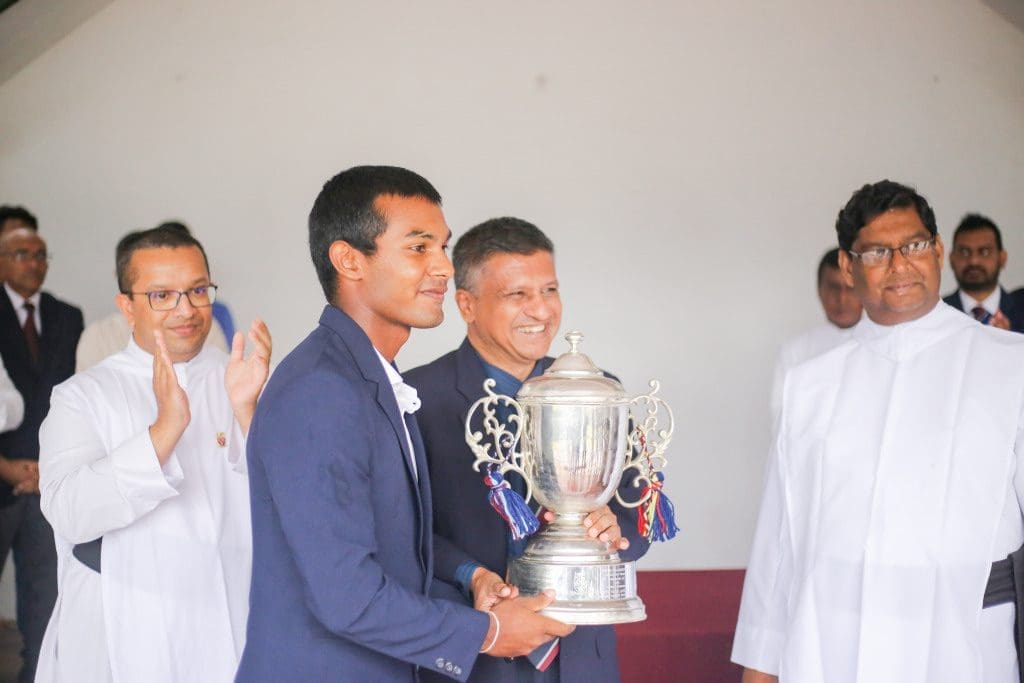
Ever since 1914, the “Hill Country Battle of the Blues” has been a spectacle of epic proportions that has enamored sports fans nationwide. The formidable Trinitians displayed tenacity and mettle, dominating the event until the 1950s and cementing a legacy that has persisted for well over a century. As we conclude the 104th iteration of this exhilarating showdown, it’s noteworthy that Trinity secured an impressive lead with 24 wins with their win this year, compared to Anthony’s 11 – a testament to the intense competition and rivalry characteristic of this momentous encounter. The ”Hill Country Battle of the Blues” trophy is named after one of Trinity’s most pronounced cricketers at the turn of the 20th century, John Halangoda, who was an exceptional athlete, However he not only brought glory to Trinity but also to its formidable and friendly rivals St. Anthony’s College, St. Anthony’s College provided some exceptional battles when John Halangoda was coaching them, Later the winners of this encounter were gifted with the “John Halangoda Memorial Trophy” In memory of one of the greatest cricketers in this eminent battle. Both Trinity and St. Anthony’s College are illustrious schools in Kandy with a long history of academic prowess, good sportsmanship, and cultural refinement. Playing cricket for a trophy for 104 years is a demonstration of the healthy inter-personal relationship the sport has inculcated among the two school communities.  The “Hill Country Battle of the Blues” means much more to the students of the schools than simply a sporting competition; it is a tangible representation of a friendly rivalry between Trinity College and St. Anthony’s College. It is the main platform for young and budding cricketers to perform and to reach the final goal of the international cricket. If one were to give a definition to the “Hill Country Battle of the Blues” it is an athletic contest that goes above and beyond simple gamesmanship. It is a contest of passion, tenacity, and glory. It is a sonata that conjures up old memories, a poem in action, a tribute to tradition and cultural history, a symphony of talent and strategy, and it inspires both young sportsmen and cricket fans. This cricket game is a miniature representation of the school’s whole experience, a shared journey that resonates throughout the halls and corridors of these historic institutions and goes beyond the confines of the cricket pitch. Many excellent and renowned cricketers and personalities have played in the “Hill Country Battle of the Blues” which include Kumar Sangakkara, Ravi Ratnayake, Kaushalya Weerarathne, Lakshman Kadiragamar, Lakshman Jayakody, Richard Aluvihare and Niroshan Dickwell from Trinity College, With Muttiah Muralitharan, Mahesh Goonathilake, Piyal Wijethunge, Ruwan Kalpage, Damien Nadarajah, Marlon Vong Hagt, A.H Sheriffdeen, A.C.M Lafir and Sajith Fernando from St. Anthony’s College. There have also been 29 centuries scored in this encounter to date, with 17 belonging to St’ Anthony’s College and 12 to Trinity College. Trinity College last won an outright win against Anthonys in 2012 under the leadership of Niroshan Dickwella, who now plays for the national team as a wicketkeeper and batsman where the Trinitians were able to shower the cricket pitch with their resilience. St. Anthony’s College were the holders of the John Halangoda trophy after the 1st innings win by St. Anthony’s in 2019. The Trinitians showcased exceptional performance this year which steered the team only closer to an outright victory if not for the interruption by the rain on both the days. With only a 1st innings victory The Trinitians managed to bring back the trophy to where it belongs. Review by Nimuthu Pathiraja, Chaniru Senhas & Rehan AnandaKumar
“A magnificent work of engineering” would be the most appropriate way to describe the Asgiriya Cricket Stadium, where some unprecedented milestones have been achieved for Sri Lanka Cricket, considering the hilly nature of Kandy. The ground had to be carved straight out of the hill behind the pavilion before being levelled by ten feet, so that the end result would be one of the most alluring venues for sports in Sri Lanka. A special feature of this famous ground is the fact that it supports pace bowlers who are more commonly known as fast bowlers. During the period of Trinity’s legendary Principal Rev. A. G. Fraser in 1915 the stadium was opened by the Governor, Sir Robert Chalmers. however, the conversion of the stadium to an international one was done under the guidance of Hon. Gamini Dissanayake, a prominent past pupil of Trinity College, in 1982. The then President of the country Hon. J R Jayawardane opened the stadium as the 2nd international cricket playing venue in Sri Lanka Along with the forthcoming 41st limited overs encounter with St. Anthony’s College Kandy, this picturesque stadium will also celebrate the 40th anniversary of its first international test match which was played against Australia on the 22nd of April, 1983. Despite complete domination by the mighty Aussies in the above-said match, several promising cricketers such as Duleep Mendis, Arjuna Ranatunga and Sidath Weththamuny whom would later be named as Sri Lankan cricket legends scored several gritty innings. Asgiriya also hosted a fixture in the 1996 ODI World Cup where Sri Lanka scored the highest-ever score in an innings at that time, 398 runs against Kenya. However Arguably the most remarkable match which was ever hosted here would be the record-breaking test match against England in 2007, where several milestones were achieved. The most prominent being Muttiah Muralitharan becoming the bowler with the most wickets in test match history with the dismissal of Paul Collingwood. Although Muralitharan is an Antonian, he would be sure to have delightful memories at Asgiriya. This significant test match also was the 100th test match of Chaminda Vaas, one of Sri Lanka’s greatest pace bowlers. Another highlight was the magnificent retirement to Sanath Jayasooriya’s test career where he smashed James Anderson for 6 boundaries in one over. Trinity’s own stalwart Kumar Sangakkara was the player of the match with a magnificent century, Sri Lanka won the game by 88 runs which was significant and well deserved for the last match to be played at this historic stadium. Many Trinitians have represented Sri Lanka at the international level such as Ravi Ratnayake, Nilantha Rathnayake, Kumar Sangakkara, Ranjan Madugalle who incidentally is the only match referee in the world to officiate in 500+ matches and more recently Niroshan Dickwella and Matheesa Pathirana, Hasitha Boyagoda all of whom have been groomed and coached at this historic stadium. The 41st one day encounter which is scheduled to be held on the 29th of April for Sir Richard Aluvihare trophy, will also be played at this historic venue where the lions will be looking forward to grabbing their final victory of their winning streak, which includes the all-island schools one day championship, all island schools two-day championship and the John Halangoda Trophy. An Article by Chaniru Senhas, Nimuthu Pathiraja and Rehan Anandakumar
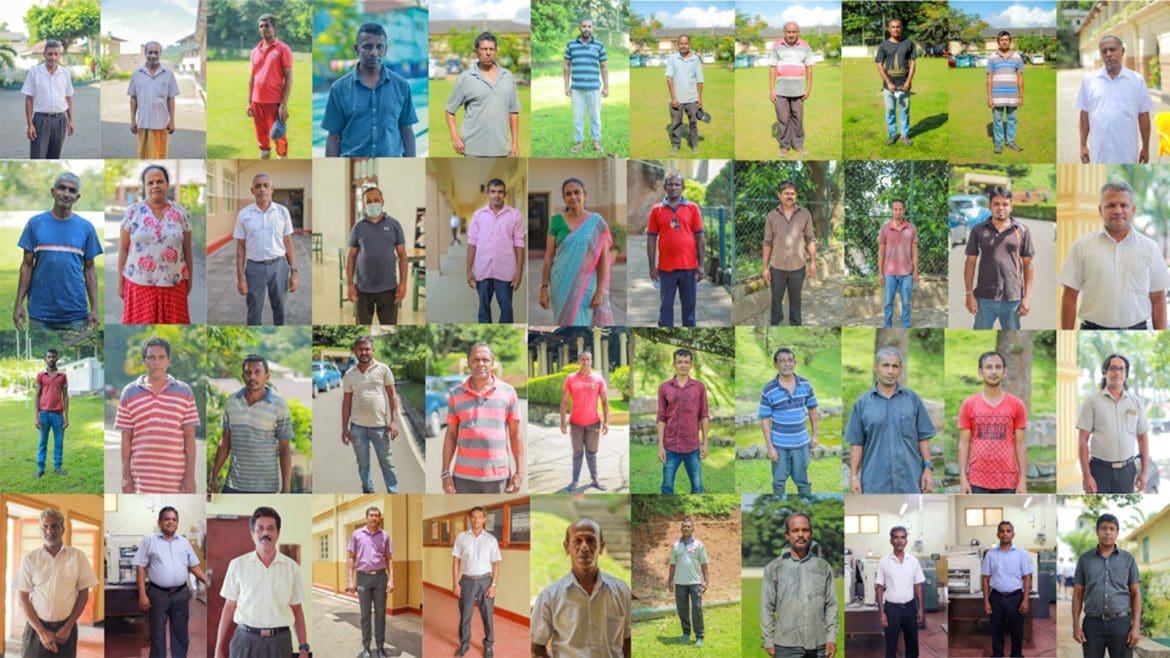
මහනුවර ත්‍රිත්ව විද්‍යාලය පදනම් වී ඇත්තේ ක්‍රිස්තියානි සාරධර්ම සංස්කෘතිය මත වන අතර එය සිසුන්ට පෙළපොත් පදනම් කරගත් අධ්‍යාපනයට වඩා සිසුන් මිනිසුන් ලෙස හැඩගස්වන වටිනාකම් මනස් තුළ රෝපණය කරයි. සිසුන් ඉක්මනින් එහි ව්‍යුහයන් සමඟ පමණක් නොව, එහි පොහොසත් ඉතිහාසය සහ සහෝදරත්වය සහ "පවුල" පිළිබඳ ගැඹුරු සංකල්පය සමඟ බැඳේ. මෙම පවුලේ වැදගත් කොටසක් වන්නේ අනධ්‍යන කාර්ය මණ්ඩලයයි.