GENERAL ARTICLES

It was on the 3rd of December 2007, when Sri Lanka hosted England at the Asgiriya Cricket Stadium for the 1st Test Match. This was a very special day for the Sri Lankan cricketing fraternity and especially for the Kandyan spectators. As Muttiah Muralitharan was inching close to a world record of being the highest Test Wicket Taker. On the second day’s play, the scenic and peaceful ground had suddenly transformed into a cauldron of bubbling tensions. The swelling crowd at Kandy waited with bated breath for its favorite son, Muttiah Muralitharan, to break Shane Warne’s record for the most Test Wickets. Murali needed just 5 wickets to rewrite the world record under his name surpassing the great Australian leg spinner Shane Warne who had clinched 708 wickets. He drew level with Warne when he had Ravi Bopara caught down the leg side on the second afternoon, but was forced to wait due to the rain interrupting the play. Finally, the reality-altering experience arrived when Murali, bowling from around the wicket, spun it past Collingwood to shatter his timber. In fact, the batsman had played down the wrong line, as he didn’t pick the delivery that went the other way, a delivery which Murali was renowned for, the doosra. As Kandy’s favorite son, Muttiah Muralitharan broke the world record, there was celebration all over the place. Firecrackers were burst amidst wild jubilation. The usually serene ground at Kandy had transformed into one big party. He set the world record in his 116th test match well before Shane Warne who claimed the record in his 145th. The commentator David Lloyd expressed this historical occasion, ‘’Bowled him, there we go,Great scenes here, History is made it has been a long long time coming.There will be great scenes here in Kandy. A world record, and it’s never ever to be got anywhere near.Firecrackers all around the ground. This game has come to a stop.709 wickets for Muttiah Muralitharan. The greatest ever wicket-taker in Test Match Cricket” David Lloyd 2007 was a very special year for the Sri Lankan cricketing fraternity because of Murali’s world record, and more importantly, it was the 25th year after Sri Lanka gained Test Status way back in 1982, thanks to the immense contribution by our very own late Mr Gamini Dissanayake. And, it was surely a special occasion for Trinity for two reasons. First, Asgiriya had the privilege to be a part of the world record, which no one has ever got close enough to challenge; and second, Murali was the home town boy coming from non-other than St. Anthony’s College Katugastota, a school that shares a cricketing legacy with Trinity over 100 long years. Murali talked about this historical occasion with gleaming pride: “I am thrilled to have reached the landmark in my home town with all my family and close friends in the ground to watch me — it is a very special moment” -BBC 2007 This particular game was full of records and history, all of it will be covered in the second instalment to this article. Article by Shaahid Khaleel Bibliography: Ramaraj, B., 2013. Muttiah Muralitharan breaks Shane Warne’s record of most Test wickets at his homeground Kandy. [online] Cricket Country. Available at: https://www.cricketcountry.com/articles/muttiah-muralitharan-breaks-shane-warnes-record-of-most-test-wickets-at-his-homeground-kandy-71565 [Accessed 14 April 2021]. Main Image: Cricketcountry.com. 2013. [online] Available at: https://www.cricketcountry.com/wp-content/uploads/2013/12/Sri-Lankan-bowler-Muttiah-Muralitharan-celebrates-after-taking-his-World-Record-709th-Test-wicket.jpg [Accessed 19 April 2021]. Reuters Staff, 2007. Muralitharan reclaims test wicket world record. [online] Reuters. Available at: https://www.reuters.com/article/idINIndia-30797420071203 [Accessed 14 April 2021]. Video: Record Breaking Ball By Murali for 709th Wicket
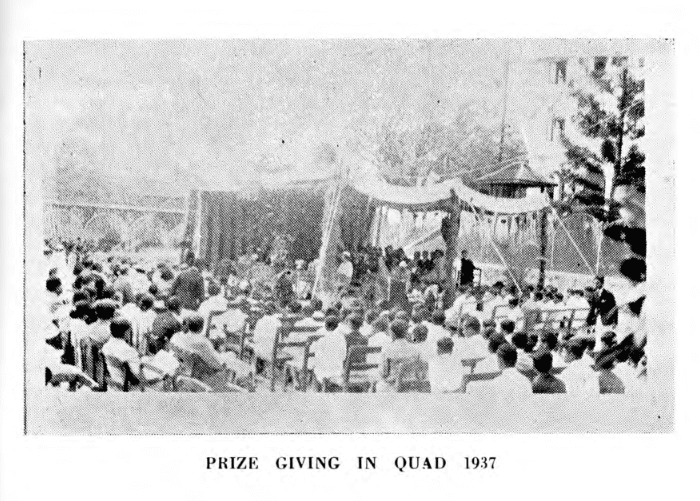
“Your Excellency, ladies, and gentlemen,My great predecessors could not in their time,Make a flattering speech through the channels of rhyme.They poured forth a poem of ponderous prose,In sentiments stilted and phrases verbose.But a promising poet in me you shall see,As after my speech you will all agree. With loud acclamation and thunderous applause,We welcome you here to our College becauseStaunch is the loyalty that bids us awaitThe King’s representative here in our state.We welcome your lady but where is Miss Joan?I’m getting a wee bit familiar I own,But by nature I’m gallant and surely I oughter,Find a good rhyme for the Governor’s daughter. Through this island of ours, you’ve gone wide and far,I read that in Jaffna you smoked a cigar,Though the road takes you East, though the road takes you West,Here in Kandy, you’ll find the School that is the best. And now that you’ve heard the speech of the wise,And now that I’ve lauded you up to the skies,And now that you’ve listened in startled surprise,And commented perhaps on my stature and size. And now that I know my friends will all say,“Come on, Marambe, never say die!”At least they, like the Assyrian, in Red, Blue, and Gold,I ask for one holiday hoping that youWill certify strongly that we shall have two!!” – Vote of Thanks delivered by the Senior Prefect T.B. Marambe, at the College Prize Giving held in the Quadrangle on February 1938. This was the first time the Vote of Thanks was proposed in verse at a Prize Giving. The speech was composed by Mr. Oswin Wright, a senior member of the College staff. The Chief Guest for the Prize Giving was Sir Andrew Caldecott, the Governor of Ceylon at the time (1937), to whom the poem is mainly addressed. Please note, the Prize Giving was usually held in the Old College Main Hall until the year 1940, except for the 1937 Prize Giving which was held in 1938. (Centenary volume pg. 424) One of the minor highlights at the Prize Day has been the Vote of Thanks by the Senior Prefect. It has always been the convention that he not only makes laudatory remarks about the chief guest but also asks for the customary Prize Day Holiday. After years of this practice,  Senior Prefects have always found new and creative ways of framing the request. Some of them have, in trying to be different and score a march over their predecessors, asked for two days and on one occasion even three days as holiday. It is generally agreed, however, that in all these efforts, though not on Prize Day, it’s notable when the Senior Prefect (1945) Jim Cooke who made to Mr. Campbell here on a short visit in 1945 the briefest and the most irresistible appeal of all “Sir we wish you a happy holiday, we hope you wish us the same”. Article by Shaahid Khaleel.
Seen in the picture above are Duncan White, Lakshman Kadirgamar, M.A.M. Sherrif and Oscar Wijesinghe, representing the four communities (Burgher, Tamil, Muslim, Sinhalese), who had brought four scrolls to the Independence square on 4th February 1948 to be handed over to the Prime Minister D.S. Senanayake to read for the public. It was in the same year Sri Lanka made her début at the XIV Olympic Games in London where in the final of the 400m Hurdles Duncan White, though beaten by Roy Cochran of USA to second place, lowered the existing Olympic record skimming over the hurdles in 51.8 secs. Thus getting the first medal to Independent Sri Lanka at an international sporting event. Read more about White at: Duncan White, the first athlete to win an Olympic medal for Sri Lanka Lakshman Kadirgamar who is considered one of the most successful foreign ministers Sri Lanka was also an Athletic Champion! Kadirgamar won the 110m Hurdles event at the Public Schools Meet and later won the Nationals in 1951. At the All India and Ceylon Inter University Athletic Meet he again won the above event.
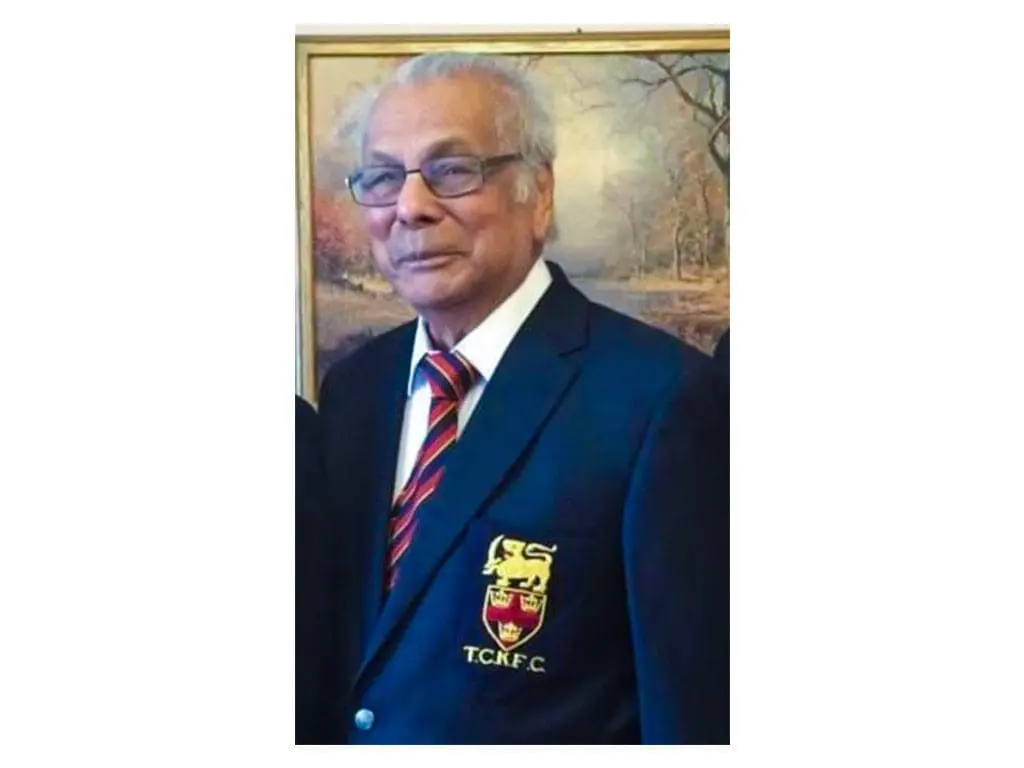
The funeral of Dr Robert Grant Sourjah was held in Sydney, Australia  on 9th October, 2020 in the midst of Covid restrictions and was thus in the presence of a very limited gathering as per guidelines prevailing in Australia: A congregation of only 20 persons was permitted in the Chapel, while 80 were allowed to gather outside the Chapel. Dr Sourjah was a Trinity stalwart in every sense. The epitome of a complete Trinitian during his school days and after, he kept the College flag flying high in every aspect of his life.  At his request even his funeral was very much with the involvement of the school he loved so much.   His casket was draped with the College tri-colour, his Rugby Lion was placed on it, and the casket was kept at the door of the Chapel till the College song and  “Wrap me up in my Trinity Blazer”  were sung.  The well-loved Trinity dirge unfailingly brings tears to the eyes of any Trinitian, and that was very much the case at this service. Robert Sourjah joined Trinity at the age of 9 in 1935. Rev John McLeod Campbell was in his last days as the Principal at that time. He later came under the Principalships of Rev R.W. Stopford and Mr C.E. Simithraaratchy. He has shared his many memories of Trinity which have been published elsewhere, but special mention should be made of the first Bradby Shield encounter. In 1945, the Principal of Royal College, Edward Lawrence Bradby offered a Shield (now popularly known as the Bradby Shield). The first Rugby captain of Trinity who led the team against Royal for this coveted trophy was Robert Grant Sourjah.  It is of interest that the 1945 Trinity Rugger team produced five doctors, four engineers and a nuclear physicist. Robert had won his Rugby Lion the previous year, in 1944.  Though he was not a hefty individual, he played in the position of prop forward.  Apart from being a highly talented sportsman he was also a very good student, and entered the medical faculty after his school career. While at university he played for Havelocks Sports Club.  Havelocks had been a great side at that time. During his tenure at Trinity, Robert Sourjah came under the tutelage of many legendary teachers.  He also had the privilege of being introduced to Rev A.G. Fraser himself during his visit to Trinity in 1945, when he visited Trinity 20 years after his departure. Robert had this privilege as he was one of the four Prefects of the College. A Prefect represented each House, and Robert was the Garret House Prefect. He had had a dream of becoming an “Aeronautical Engineer” an enthrallingly new field in that day and age. He had completed his HSC and got entrance to the engineering faculty at the university. However, it was not to be, for Mr CE Simithraaratchy, the Principal summoned him one day and told him “Sourjah, you are going to study Medicine. I have lined up your teachers and you will sit your HSC again in one year but take all the subjects necessary to get into medical school”. So it was…… Dr. R. G. Sourjah MBBS, FRCP was the result. He received his Fellowship from the Royal College of Physicians, England. He has said his thirst for knowledge was stimulated at Trinity. This says a lot not just about himself, but also about his teachers, whom he always held in the highest esteem. Whilst practising as a Consultant Physician, he qualified in himself in the 1970s with a DSc in Acupuncture. This was at a time when acupuncture was frowned upon by the Western medical fraternity.  He qualified himself as a Gemmologist and as a Travel Agent. He was proficient in six languages, the three widely used in Sri Lanka plus Spanish, Japanese and Arabic. He served in many hospitals including Colombo, Dickoya, Anuradhapura, Matale, Kegalle, Kurunegala, and Kalubowila, and taught at the University in Colombo while in Government Service before retiring, and then had a stint at Aramco in Saudi Arabia.  He thereafter returned to Sri Lanka and was a much sought after Consultant Physician in Colombo till he and his wife Inez (nee Jackson-Smale) decided to migrate to Australia. His wife’s brother, Alistair Jackson-Smale was Robert’s classmate at Trinity. Robert was the President of the TCK OBA (Colombo), a member of the College Board of Governors, and later President of the Sydney Branch of the OBA. He was Trinity’s oldest Lion at the time of his demise. He and his wife would visit Sri Lanka every year and meet all their friends. It was very interesting that their friends included the classmates of their two sons (both Trinity Lions themselves). Such was the ease with which he and his wife were able to connect with people. He would often time his visits to watch at least one of the Bradby Legs. Unfortunately, the time taken by the Schools Rugby officials in finalizing game dates sometimes ended up in flights already being booked by them, and the matches finally being played outside their holiday in Sri Lanka. He however made it a point to be present in 2013, when his son Rohan, who captained Trinity in 1975, was the Chief Guest. It must be mentioned here that he and Rohan were a rare combination of father and son having Captained Trinity Rugger, the other father and son combination being Ashan and Tharinda Ratwatte. Trinity has lost a stalwart, but he will live long in the heart of Trinity and Trinitians. May the turf lie lightly over him. Respice Finem.Nov 1st, 2020
Looking back at a proud Trinity history, many names have been involved in setting down the foundations of the true spirit of Trinity.Amongst these great personalities, Miss Valesca Reimann was someone who helped Trinity in every way possible to achieve the reputation College holds at present. She was an astonishing and adventurous woman who is considered a legend in Trinity history. At a time where education is limited to textbooks, this remarkable character showed how education spreads beyond books. Reimann, with a Masters degree in Arts Her story starts in Adelaide, South Australia in 1888. She was born to a musical family that was said to have German origins. Her father was a music teacher and he later established the College of Music in Adelaide (Australia’s first). Miss Reimann, a sister among three siblings, majored in arts, obtaining her Master of Arts degree from the University of Adelaide. The course of Miss Reimann’s life was changed dramatically in 1915 when Reverend A.G. Fraser, the Principal of Trinity, visited Australia for the Australian student Christian movement. Getting down men to Sri Lanka for special purposes was a task close to impossible due to the war. Because of this, the Principal asked Miss Reimann to join the staff as the head Classics teacher. Her appointment was only meant for two years, but it extended to 30 years because of her dedication to Trinity. An adventurous journey to Ceylon She left Adelaide on Christmas eve in 1915 to travel to Ceylon. The ship she was sailing on, the RMS “Omrah” sprung a leak on the way – Her journey to Ceylon starting in the same adventurous spirit that would continue throughout her time at Trinity. She reached Ceylon on the 7th of January 1916 and spent her first day in Galle. Here Miss Reimann mentions her first experience of the local food: “For lunch we had a most curious curry. First we helped ourselves to plenty of rice. We added curried meat with gravy, like a thick stew, then several curried vegetables and a very hot mixture of onions, pounded chillies and ground coconut called “Sambal”. Finally, over the whole mixture we sprinkled coconut and added some hot chutney and plantain. Luckily I did not take much as I found it very hot and my eyes began to stream” All the Ganagways are up – Valesca Reimann Encountering many new experiences and learning a lot of new things about the country, she made her way to Kandy by train. During the journey she met one of the Sinhalese College masters, who she says, “had an unpronounceable name of six syllables and fifteen letters!” She met the College Principal for the second time at the Kandy station waiting to welcome her. She was to live with a missionary family bungalow in the College compound.                         Her diaries are very interesting due to the detailed recording of her many encounters in Sri Lanka, and specifically her days at Trinity. She visited many places, famously travelling to Matale and Dambulla by bicycle, and collected a vast amount of knowledge on Sri Lankan culture. Below is a transcribed hand-drawn map of her travel destinations: Life at College She joined the Trinity community to teach the higher forms western classics, mathematics and English, and later trained the choir and played the piano in Chapel. During her time she was probably the most familiar figure in the school for there was no activity that she ever missed, be it a society meeting or a house match, helping to edit the College magazine, organizing the Glee Club, and taking part committees. She had a talent for observation and humour: ” The use of the handkerchief is rare. A College boy thinks nothing of sniffing hard right through a lesson. I found it very unpleasant at first, but one gets hardened to it.” “I hear that one of our boys has received a telegram: “Uncle expiring. Funeral tomorrow.” and next it is followed by another: “Uncle recovering. Funeral postponed.” She was such an amazing woman that neither her race nor her gender affected how the boys or the staff saw her.  However, her presence changed to the attitude towards women in the minds of the students and adults. With other women members of the staff, she attended the jubilee dinner, and, following this example, quite a number of old boys brought their wives and sisters, an unheard of thing 10 years previously. ‘I think,’ said Miss Reimann, ‘that it has been a jolly good thing to have one or two women in the boys’ school, and to let the boys see how European women treat them. It has reacted tremendously on their attitude to their own women’. Later on Miss Reimann was called upon to write the College history, and together with the widespread reputation of her at that time, she was rewarded with a General Lion, being the first, and so far the only, woman to receive a General Lion in Trinity’s history. Listed below are a few of the other early pioneers who had received General Lions: 1915 – ST. L H De Zylva, R C Edwards, Rev A G Fraser, G A Halangoda, A C Houlder, C P Jayawardene, G R Mulgrue, W Olegesegeram, C E Simithraaratchy 1919 – H Dedigama, H E Garvin, Rev L J Gaster, M Maung Gyi, H W Mediwake, A Paynter, P D Pelpola, Sgt. Rignell, V C Schokman, D B Seneviratne, M Tun Tin 1922 – H R V Johnson 1923 – R R Breckenridge We also found probably the only available letter handwritten by Miss Reimann: It is clear that she helped Trinity to achieve her now famous golden days alongside Principal Fraser. Miss Reimann is not spoken about much during recent times, but her name can be considered as one of the pillars which hold up the present day Trinity community, alongside other unspoken Trinity heroes! “Trinity College will build on its heritage and goes to greater heights in the new millennium. The motto of Trinity is
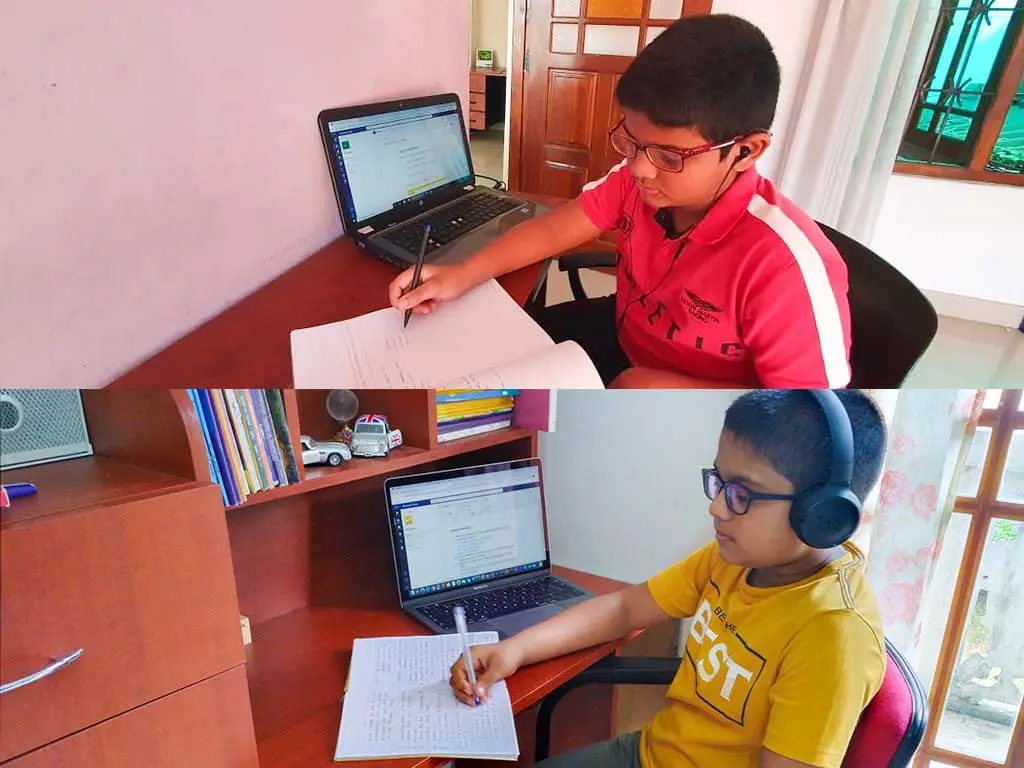
By Chaniru Senhas and Nimuthu Pathiraja from Grade 6 Due to the COVID-19 pandemic, school was closed and both of us were very bored waiting for school to re-open. And then suddenly, something unexpected happened! We were given school accounts and were asked to sign in to Microsoft Teams. This was a mind-blowing idea for us. Online learning is very different from normal learning and also exciting. It has its pros and cons, and it took a long time to get used to “the new normal”. But it has been a really enjoyable experience, and now we have got used to it, we love it. On the day of the first online session, our heads were bubbling with anticipation. It was a brand new experience for us and filled us with excitement. The sessions were short and scattered with fun.  Lucky for us, our parents were always there to remind us the time of the online sessions, and wake us up in the morning for them. But sometimes we wake up early in the morning and get ready for the online sessions and get in front of our laptops, only to find that it is cancelled. We didn’t mind those occasions too much. All the teachers sent us videos before every lesson, and during the class sessions teachers shared their screens and showed us very creative presentations. We realised that teachers had worked very hard on creating the presentations.  Another thing was sharing our science experiments. We recorded videos and uploaded them to our Class Team. Then the teachers gave feedback on our experiments and corrected the mistakes. Once, even the Principal replied on one of our experiments! For us probably the best part about online learning was the assignments. Teachers would make assignments on Microsoft Word or Forms and they would upload it with a due date.   Another useful thing was when you could not come to the class, the meeting would be recorded and saved. Sometimes this came in handy when we didn’t want to wake up early!  We can always write the short notes that were given because many teachers uploaded the notes to the Class Notebook, which is a place where teachers can handout quizzes and homework for us. We can always get organized and know when our next meetings are coming up through the calendar and notifications. And, you can always share school documents via OneDrive and jot down notes online. One of the main advantages was when you had a question about any assignment, you could simply ask the teacher when they were online.  Although there were many advantages with online learning, there were some disadvantages as well. One was that in case of a power cut you would have to wait.  Both of us had the problem of slow network connection as well. Sometimes as soon as the class finishes, we get calls from friends asking what teacher did today!  We also had to share our devices with our siblings who think it is fun to trouble and distract us during online classes!  There were also some things which we missed a lot like the library, playing with our friends, and the traditional morning assembly.  Through it all, the teachers were very committed to making sure we covered all the work. We are extremely grateful to everyone in school who helped us. Thank you!
“Holy, Holy, Holy, Lord God Almighty! Early in the Morning our song shall rise to thee. Holy, Holy, Holy! Merciful and Mighty! God in three Persons, blessed Trinity!” -Reginald Heber (1783 -1826) You will hear the sound of the organ playing the opening line of the hymn typically on a Sunday morning, or on this occasion, on a Monday – with the pealing of the chapel bell. A few young boys line up in series behind the processional cross, nervously waiting to officially be a part of the sacramental Body of Christ, as the Lord Bishop confirms them as members of the Church. This festive Monday is brimmed with fathomless waters of truth which is naked yet shrouded with our incomprehension. Trinity Sunday is the Sunday after Pentecost. The Church calendar stipulate this day for the congregation and clergy to set forth their attention to the Whole entity of GOD – The Triune God – God the Father, God the Son and God the Holy Spirit, three persons yet one God. This doctrine certainly is commonly reckoned to be deep waters that we have so imperceptibly sailed into. The doctrine of the Holy Trinity is very often treated very much as Einstein’s Theory of Relativity is treated, as if it were a theory generally acknowledged to be true, but so difficult and recondite that its exposition must be left to theological experts. Or, even worse, the Trinitarian doctrine is sometimes treated with faint derision, as if it were a complicated and unnecessary piece of theological pedantry invented by some ecclesiastical back-room boys in order to bewilder the honest man in the pew.  This word “Trinity” has a cosmic deep unerring description of the very nature of God the creator, the redeemer and the sanctifier. Why then would our forefathers name the Kandy Collegiate school as – Trinity College? Clearly, the naming of a school evokes passion and interest and is, in and of itself, an opportunity for education. Naming schools after worthy people keeps their names alive for people who otherwise might never hear of them. For example, we can see a lot of Christian schools are named after a Saint or person who would be a great example for all who pass through the gates of that Institution. Then, what example does the name Trinity hold for its students? What is the buried example that has got lost in history? It shows that every past or present, young or old, student or teacher has a venerated obligation of representing the very whole entity of God. Trinity College has been built on the foundation of the Christian faith, to raise outstanding citizens regardless of race or religion that reflects the character of Christ, shining forth a light as a blessing to all. Indeed, its forefathers bearing great risk and a great vision have tirelessly laboured to bring the immeasurable and most coveted blessings of an incomparable experience, to the body mind and spirit of all who passed through the gates of this great school. The school unveils the significance of the Triune God, the diversity and the community. Each of the three is different from the other yet they are of one being that loves each other. While a college is meant to be a very diverse community, the thought of Trinity brings everyone together without the deprivation of their individual identities while keeping good communion with each other. Over the years Trinity College has stood with the true nature of the Trinitarian doctrine, a community that upholds diversity and acceptance as one family. Trinity Monday itself has been espoused to bring together the whole community in celebration representing divergent characteristics of the College, where even important events of the school has taken place with it, such as the opening of the Alison Building by Mrs Fraser. The whole school community transmogrifies around the chapel (or more zealously remembered as the “heart of the school”) that represents these Godly values. The Triune God and its Christian identity is shown through the symbolism of the College crest and it should be revered as much as a clergyman reveres his sacred vestments as it represents to put on Christ. The Three Crowns in the shield, adopted from the Oxford University crest, symbolize the Triune God – The Holy Trinity; God the Father, God the Son and God the Holy Spirit whose name the school bears. The Cross in the shield signifies the way to the crowns – God. The Kandyan Lion above the shield represents the people of Sri Lanka. With great benediction the school and the chapel (Holy Trinity Church) bearing the very name of the Triune God finds it fitting to thank and praise God as we enter the season of Trinity in the Church calendar. As we return to the early Monday morning where our song rises to the Trinitarian God with splendid threefold proclamation of HOLY! HOLY! HOLY! The Church feast begins. A Church feast is an important day in the church calendar, with the Bishop as the main celebrant in the Eucharistic Service that is often joined with the Confirmation Service where the congregation gives thanks to God for all who has laboured for the building up of the Church. The Church feast of The Holy Trinity Church is traditionally celebrated on Trinity Sunday, but with its correlation with the College that bears the name of God, it seems felicitous to have the annual Bishop’s visit to the College linked with the Church feast. There wouldn’t be a day more appropriate to give grateful thanks to God for his servants who obeyed the divine calling for a mission in Sri Lanka on the following Monday – Trinity Monday. “Holy, Holy, Holy! Merciful and Mighty! God in three Persons, blessed Trinity!”
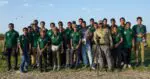
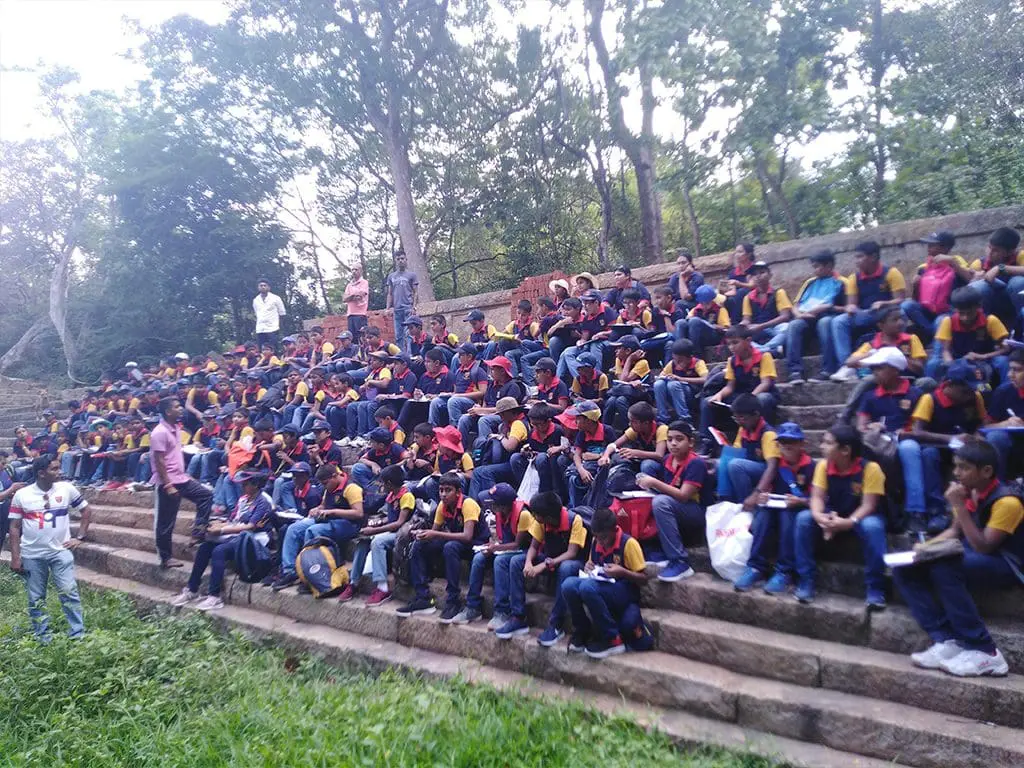
We have two reviews by students who went on this excursion: On the 28th of February, 2020, the grade 6 students went on an education excursion to Ritigala and the Moragahakanda dam. We travelled in 4 busses. It was awesome! We played many musical instruments such as the guitar and sang many Sinhala and English songs. We also listened to songs. We were swinging and falling in the bus as the driver went very fast in the curves. We ate a lot of junk food! We had left the school at 5.50 in the morning and had breakfast on the way. As soon as we got there we posed for a group photo. Then we were taken through the forest by the guides who were there to teach us. By around 10am we reached Ritigala in Ganewalpola which is an isolated mountain. Ritigala holds the ‘Banda Pokuna’ which is the largest pokuna in Asia. There are 1200 types of plants at Ritigala and 5 of them can only be found in Ritigala. There is 3500 acres of land. The climate there is cooler in comparison with the hot and dry climate of the region. It is believed that Buddhist monks came here to meditate 100 years ago. Then, we had lunch. We also had a group photo taken with the Moragahakanda dam in the background. After lunch we went to the Moragahakanda dam which is a hydro electric dam used for generating electricity. It is 213 feet tall and impounds the Amban river. Finally, we went back to the college. We had tea at 4.00 pm and sang songs and watched movies on the way. We reached the school at 8.30 pm where we were handed to our parents. I really liked this trip very much, but to make it better maybe they could have taken us all the way to the summit of Ritigala. Review by Chaniru Senhas On 28th February 2020, the grade 6 boys of Trinity College went on the most exciting trip they’ve ever been in their school life so far. That is the trip they went to Ritigala and Moragahakanda. We left school early morning saying goodbye to our parents. We were so excited that as soon as we left the school we started playing drums and singing songs.  When the driver put some pop songs we had to cover our ears with our hands. A boy had brought some sunglasses that showed different coloured lights which took everybody’s attention! By 7.00am some of us were standing on seats. We had completely forgotten that teachers will give remarks for our discipline and that the grade head had given a booklet which was to be finished before the end of the trip and it was considered as a monthly test. Soon, we stopped near a field at Naula. That was the most beautiful scene I have seen,  which we enjoyed while having our breakfast. After having our breakfast we sett of again. We can consider Trinitians as “Pop Music Lovers” as we sang non-stop pop songs. Finally, we arrived at Ritigala. We first went to a pond which we later on found that it was named as “Banda Pokuna”. According to the guide it was Asia’s biggest pond. It used to cover 2.5 acres. The pond was destroyed by Cholas. Now they are renovating it again. Next, we walked a long way and came to a place called the hospital where the guide explained us interesting things. The most amazing thing was that at that time when someone was sick they would keep him on a bed that was made of stone. For a long distance we climbed up Ritigala Mountain which was very tiring. Somehow we climbed up, and got to the next landing which was known as “The Dharmashalawa”, which had an extremely appealing cooling system made by wooden planks laid upon water. With the help of this system it was very easy for monks to meditate. The most tiring part of the journey was to climb up the steepest part of the mountain. After much struggle we finally made half way through the mountain but security guards didn’t let us pass beyond that due to security measures. At midway there was an old foundation and Ritigala’s tallest tree. Afterwards, we climbed down the mountain and returned to our buses at about 11:30am and went near the car park at Ritigala where we stopped to have our lunch. It was 1.30pm when we were provided lunch due to a delay of supplying the food. Our lunch was fried rice with chicken, dhal and vegetable chop suey. Once we had finished our lunch, we set off to Moragahakanda. By 5pm we arrived at Moragahakanda. At Moragahakanda Dam first we walked to the top of the dam where there was a fabulous view of the blue waters. There was a big hydro-power plant and lot of big buildings. The garden was full of lot of flowers and grass which made it look very beautiful. We spent about an hour at the dam and started back to school. By about 8:30pm we arrived at school, said goodbye to our friends and went home. That was the best trip I have ever been on. Information about Ritigala 1. It is 766 meters above sea level. 2. Ritigala is one of the 3 nature reserves of Sri Lanka. 3. There are 3 climates in Ritigala. 4. There are 240 types of medical herbs in Ritigala. 5. 54 plants endemic to Sri Lanka are found there and consists of 3766 Acres. 7. 90 acres are reserved for the Archeological Department. 8. The Name Ritigala comes from Prince Arritagala. 9. More than 8000 Monks lived in Ritigala. 10. Before monks arrived yakkha tribes lived in Ritigala. 11. Monks lived in Ritigala from 3 BC to 8 AD. 12. There were 74 caves for monks to meditate. 13. Ritigala didn’t have mosquitoes!   Some facts about the Moragahakanda Dam The Moragahakanda
Following is a poem which caught our attention and we thought of featuring it on our website. “Take me Back” written by Sachith Keragala from the batch of 2017. Take me Back Take me back to the school on the hill, Back to the days when time stood still, Walking the path under the tall palm tree, The good old days when the young heart ran free. Take me back to the Chapel at dawn, With the golden rays on the evergreen lawn, The air sweet with the young hymns sung, Ending loud with the great bell rung. Take me back to the room under the lab, Hours of lessons with nothing being grabbed, Mischief punished with the stroke of the cane, Lessons of life learned through pain. Take me back to the quadrangle at noon, One more over till the bell rings soon, Tennis balls smashed to the Napier roof, Crawling back to class with our heads held aloof. Take me back to the 100th Big Match, A heave over long-on to the pavilion dispatched, Scorched in Asgiriya under the fiery March sun, Unwavering support till the game has been won. Take me back to the Bradby in May, Five points up with twenty more to play, As the fullback charges like a wolf on the fold, Pushed on by the stands of red, blue and gold. Take me back to the magnificent main hall, With the names of legends immortal on the wall, I feel incomplete though I stand strong and tall, For a part of me stayed at the Best School of all.

The young Trinity Mozart!

We came across a very talented Trintian who composes and plays his own music. This young Trinity Mozart is Hasitha Epakande from grade 12. We first got to hear Hasitha’s playing on an Instagram post and thought that he deserves a bit of recognition. Being an interested young chap in Western Music, Hasitha first started to play a piano in grade 6. Eventually he completed IWMS music exams up to Grade V and bought a piano while he was in grade 9. Hasitha says that he watched so many classical music videos and was influenced by the compositions and their composers. Although we have compared Hasitha to Mozart, his all time favourite composers are Beethoven and Liszt! A modern day composer Hasitha has his compositions uploaded on Musescore, an online website where music can be put into score sheets with playback and download options for visitors. To this date, he has completed 4 piano compositions and 1 orchestral composition: December Winds ( Nocturne in D Minor )   China La Mattina (The Morning) (Orchestral) Der Kolibri ( The Hummingbird) Dance of Death (Etude in A Minor) A committed pianist Hasitha improved his technique with the help of his teachers and by watching videos of technical studies of different composers, and of course by practising a lot! “Always maintain a natural hand technique which is neither a Stiff one nor an Over – Relaxed one.” – says Hasitha For those who study music, you will see that Hasitha does like to improvise on the piano, making his style of playing a bit unique, which also means that he does break few rules in Western Music similar to Jazz composers. He likes both Eastern and Western Music and also sings. At the Sri Lanka Festival of Music, Dance and Speech 2019, Hasitha became the All Island Winner of the Piano Solo (Own Choice), and at the same competition, he also received the London College of Music Trophy for the Best Outstanding Piano Solo. Hasitha is grateful to all those who have supported him and continues to do so throughout his music journey. He specially thanks his parents, his brother (who also happens to be a talented singer!), his Western Music teachers: Mrs L.C.N.C Surendrakumar, Mrs K George and Mrs L. I. Hettige, his friends Rahal, Pamuditha, Mark and Shehan and many more. Hasitha is studying for his ALs in the Physical Science stream.   “Let your feelings flow through the instrument, neither over-relaxing nor straining, but naturally.” – Hasitha Appreciation over competition In a society where every sport and entertainment activity is considered a competition, with few judges making the decisions, we have taken quite a different approach in recognizing and appreciating the talents of young Trinitians and giving them the motivation of ‘becoming best at what they do’. We hope this would be the first of many posts to appear on the website in the future!   If you know of a Trinitian or a group talented in music or any other activity, write to us via our feedback form on the College website. We always try our best to highlight every group and individual in school. Hasitha Epakande in action – playing Dance of Death (Etude in A Minor): An improvisation in B Flat Minor:
It seems to be the natural thing that we remember the lives of people on their deaths or memorials. Ten years have gone by since the death of Mr Barnabas Alexander. But the life he left behind still continues. When Barnabas Alexander of Trinity College, Kandy died on December 15 2009 he was in his home, listening to his electronic Bible. He was steadfast in his Christian beliefs and maintained his daily routine in an orderly manner. Mr Alexander was blind. He had lost his sight in his childhood due to an accident. In spite of this at no time did he allow himself to be limited by this handicap. Being an accomplished musician he played the piano, organ, cello, and guitar by memorizing the music notes written in Braille. He learnt music from Mrs Ellen Jorden and Mrs C. Ekanayaka while studying at the Ratmalana School for the Blind. He joined Trinity College in 1961 as a telephone operator in response to an invitation by Mr C. J. Oorlorf, then Principal of Trinity College and also Manager of the School for the Blind. There were three things that struck those who met Mr Alexander: that he single-handedly manned the school telephone switchboard, that he was a markedly musical person, and that he was blind.  He would greet telephone callers with the words “Good morning, Trinity College” or “Good afternoon, Trinity College”. He would recognize voices years later, and startled callers by addressing them by their name. Trinity students typically encountered him through his great gift for music. Those of us who began in the junior school remember seeing him being escorted to the lower school hall for the weekly singing class. Upper school students heard him at the piano at morning assembly, when he played charming background music until it was time for the assembly to commence. Countless students at Trinity learned to sing the school song, the School Hymn and the National Anthem, thanks to Mr Alexander. Those in the school choir had the privilege of being accompanied by Mr Alexander. His dedicated playing on the chapel organ was an integral part of the regular Sunday services and of weekday morning worship. For several generations of students and those who prayed at the Trinity Chapel, the invitation to worship came with two distinct sounds: the pealing of the chapel bell and the strains of the chapel organ, with Mr Alexander at the keyboard. From his first days at Trinity, Mr Alexander lived in quarters on the school premises. Students will recall holding him by his hand and escorting him from the school office and up several steps to his room near the Ryde Boarding House. In his room, he would accommodate requests from students to play the piano or to listen to the commentary for international Test cricket matches on his radio. We discovered that his disability did not matter in the least in our dealings with him; the fact that he was blind taught us to think positively about the blind. Around 1980, Mr Alexander married Sujatha, who had partial vision, and she moved into his new living quarters, just above Ryde House. They were a devoted couple, and she was a dedicated spouse and a gracious hostess. Her demise in November 2008 was a devastating blow to her husband. Although he recovered his stride, it was partial. Those close to him sensed he was pining for her, right to the end. For those who had a closer association with Mr Alexander, it was a lesson in life. He was a great conversation maker. It was amazing how he kept in touch with the world around him mostly by listening to his radio. BBC World Service was one of his favourites. He had a well tuned sense for what was right and wrong and always showed by example the meaning of duty, responsibility and commitment. He believed in certain standards of conduct, and bristled with indignation when formalities were breached or courtesies not followed. Above all, going beyond his genial demeanour, the cheerfulness that he extended in his life, even after having lost his sight, filled many with wonder. Even in his final year of life, the Chapel and the Organ was inseparable from Mr Alexander. Such was his attachment to the Chapel and music. During the final months of his life he once came on a Saturday evening to play for the Sunday morning service and returned to the hospital where he was admitted. Choristers used to bring him in a wheelchair, carry him to the organ stool where he played till his fingers could move no more. The spirit and desire to play the organ even with his continuously failing physical being was inextinguishable. Those who knew Mr Alexander will miss him. He was a landmark individual in the school. We have only to think about the music he played to bring back wonderful memories of the school chapel; its murals, pillars and carvings; its picturesque surroundings; the distant Hantane by day, and the glow of candles at dusk at the Carol Service. When he finally bade goodbye to life, he left whatever the worldly wealth he had in a scholarship fund for the students of Trinity. Mr Alexander was lovingly remembered at this year’s Carol Service. The service booklet carried a small article and the Choir paid its tribute by singing ‘Jesu, Joy of Man’s Desiring’, one of the pieces he used to play often. We all make a LIVING by what we get. But we make a LIFE by what we give. It could well be, that life may have not given a good deal to Barnabas Alexander; but most definitely Barnabas Alexander gave back to life a lot more than he got from it. Ananda Abayaratna and Lasantha Tennekoon