



By Master T. Madugalle, Master S. Mathavan and Mr Subash Dhanasekara
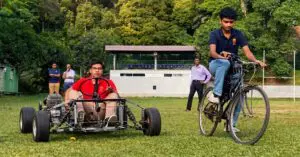
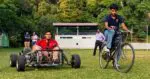
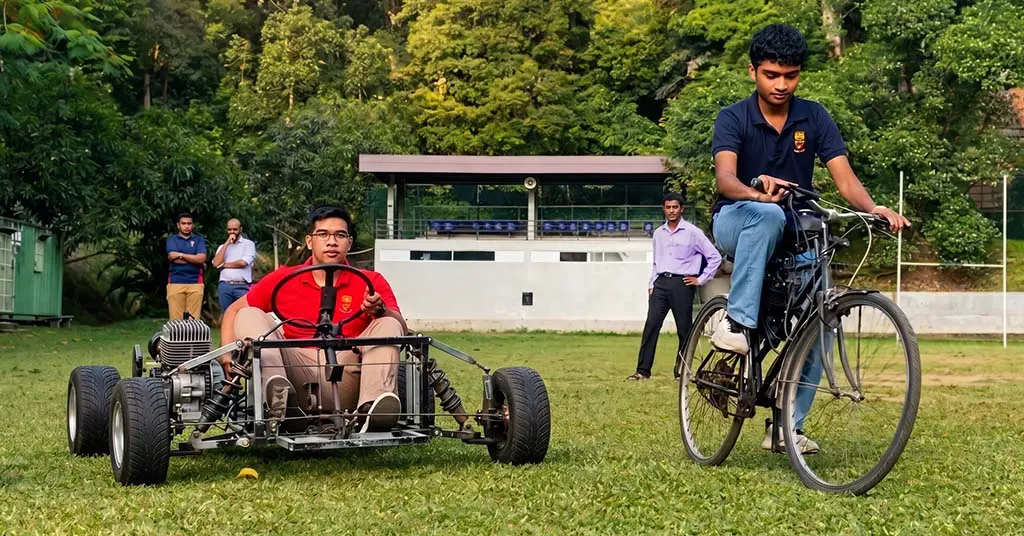
This is the story of how a team of student innovators took a pile of salvaged automotive parts and raw scrap metal and engineered them into a fully functioning, high-performance custom go-kart. Moving away from standard commercial kits, the project’s focus was to solve geometric, structural, and powertrain integration challenges using components from three-wheelers, motorcycles, and other automobile components. The final prototype demonstrates a high power-to-weight ratio, an optimised drivetrain for low-end torque, and a customised single-wishbone suspension system, validating the viability of sustainable, low-cost mechanical fabrication.
Project Specifications & Team
- Project Lead: Mast. Savinuth Mathavan
- Advisor: Mr. Subash Dhanasekara
- Petrol Engine Donated By: Master S. Vishaal (2025 A/L batch)
Project Team
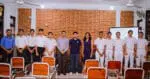
| Grade 12 (2025) | Grade 11 (2025) | Former Committee |
| * Nazmi Azman * Kawishka Roshan * Shamin Udupuldeniya * Toshan Madugalle * Menul Bandara | * Pinitha Samarasinghe * Gayanuka Bambaragama * Menula Bandara * Dihen Benthota * Sanuga Ranaweera * Nithin Niduwara | * President: Master C. Rajnayake |
1. Structural Design & Chassis Geometry
The foundational architecture of the vehicle utilizes a bespoke ladder-style chassis engineered from structural box-bar steel.
- Material Justification: 1” box-bar profiles were selected over traditional tubular steel bars, ensuring high torsional rigidity and minimal deflection under dynamic loading. Steel is easier to work with in the College workshop environment without needing specialized equipment for processes such as welding, unlike aluminum. Material was readily available, and an electric arc welding facility was available in-house.
- Geometric Design: The frame geometry was custom-engineered to achieve a low center of gravity and an aggressive, lean profile while maintaining optimal driver ergonomics and structural integrity at high-stress points.
2. Steering & Front Suspension Innovation
To achieve high responsiveness and directional stability, a steering system was designed and manufactured in-house using the Pitman arm steering concept. The steering wheel and linking system utilize old motor vehicle components from the College Automotive Workshop stock.
- Fabricated Wheel Hubs: Rather than utilizing stock components, custom hubs were machined and fabricated using high-grade steel piping, Mitsubishi ball joints, and needle bearings as the wheel bearings for the three-wheeler axles to spin in.
- Frictional Optimization: Needle bearings and ball bearings were integrated into the fabricated hubs. This offers a significant reduction in the coefficient of friction and superior radial load capacity compared to standard brass or nylon bushings.
3. Powertrain Integration
The vehicle is propelled by a 70cc internal combustion 2-stroke petrol engine, which was initially intended for a moped half the size and weight of our project. After mounting of the engine, one major problem was the slipping of the centrifugal clutch in the internal transmission due to the combined weight of the kart and the driver. As a result, the gearbox was serviced by the team with fresh parts and lubricants, but it did not make a noticeable change in the performance.
After experimenting with the gear ratios, we opted for a gear reduction system to maximize the torque by using the 2-stroke engine’s high RPM limit to our advantage. We integrated a 2-stage gear reduction drive system, where the output sprocket of the internal transmission drives another reduction gear, which then drives the single rear axle.
4. Rear Axle Dynamics & Braking System
The rear-end drivetrain architecture incorporates heavy-duty motorcycle components to handle power transmission and braking stresses.
- Tyre Mechanics: To minimise cost and added weight to the vehicle (modern differential systems used in vehicles, which allow efficient cornering and minimise loss of power, are heavy), we opted for a single-wheel design that receives power with minimal loss and makes cornering much more efficient without the added weight of a differential. This also allowed maximum weight to be placed on the rear driving axle, maximising adhesive power, which results in good traction.
- Integrated Assembly: By retaining the original motorcycle hub, sprocket, and mechanical drum brake assembly, the vehicle benefits from an engineered braking system to ensure the safety of the rider and the vehicle.
Workshop & Collaboration
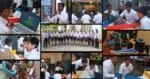
This entire vehicle was planned, assembled, and finished utilizing the College Workshop’s facilities, without any outsourcing. Manufacturing processes were carried out with the help of the Maintenance Workshops. Final fabrication of the gear system and suspension was carried out at the workshop site of Master S. Mathavan (President of the Automotive Society – 2025). Members and former committee members contributed to the build to the best of their capacities.
Skills Gained by the Team
The team gained valuable experience in various subject areas, including, but not limited to:
- Engineering design and drawing
- Problem-solving
- Metalwork
- Power assembly
- Engines and transmission
- Practical physics applied in the automotive industry
- Teamwork
- Repurposing and recycling