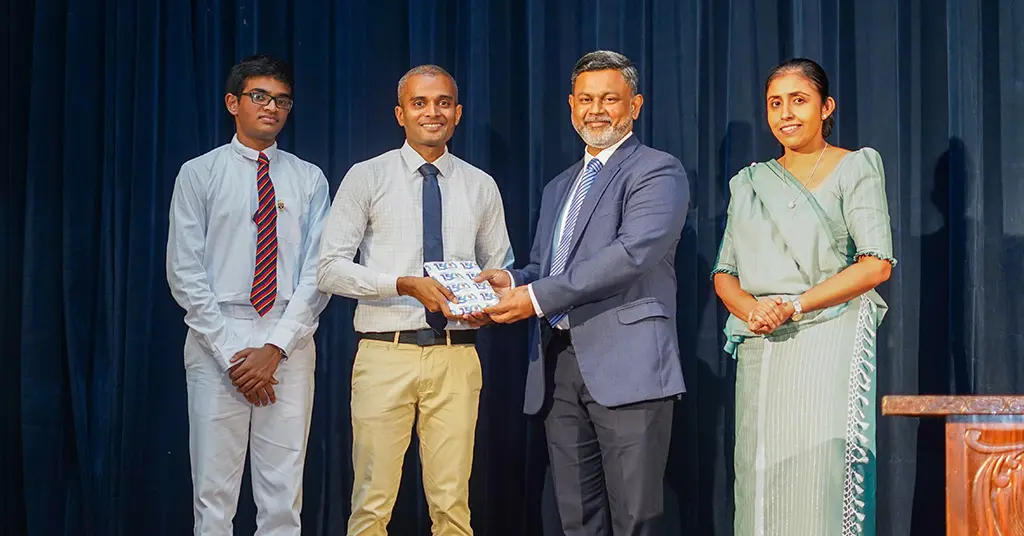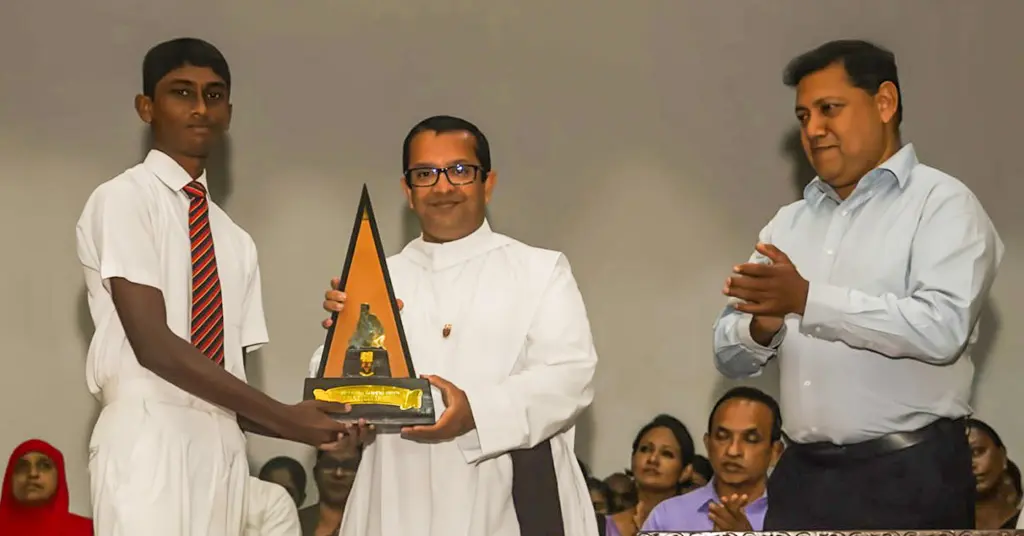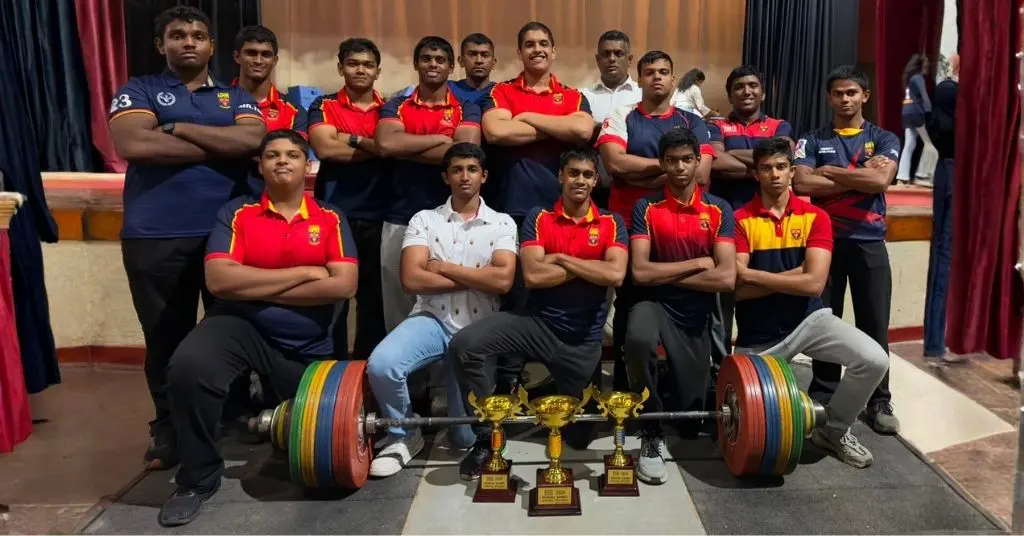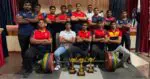
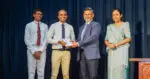
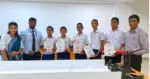




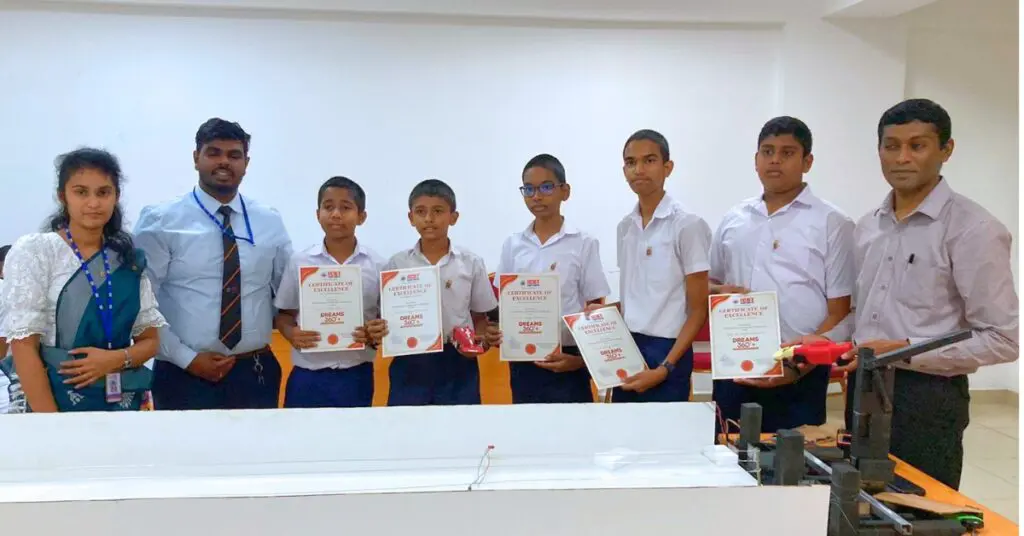
Members of the Automotive Society of Trinity College secured first place at Sri Lanka’s first CO₂-powered car racing competition for school students, held as part of the Technology Exhibition organised by ICBT Kandy Campus on 17 and 18 June 2026. Demonstrating innovation, creativity and practical engineering skills, the team competed with two student-built vehicles: a wooden car constructed largely from scrap materials and a student-designed 3D-printed car. The wooden entry claimed first place, while the 3D-printed model finished fourth in the final rankings.
As the first competition of its kind organised for school students in Sri Lanka and only the second CO₂-powered car racing competition held in the country, the event provided a platform for young innovators to apply engineering concepts beyond the classroom. Participants were challenged to design and construct miniature racing cars that met strict technical specifications while considering factors such as aerodynamics, sustainability and performance.
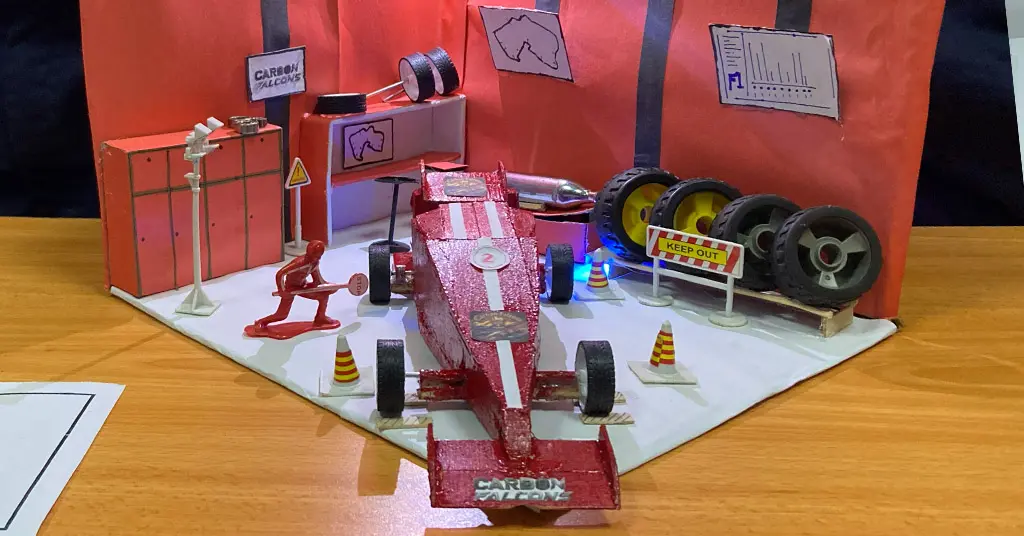
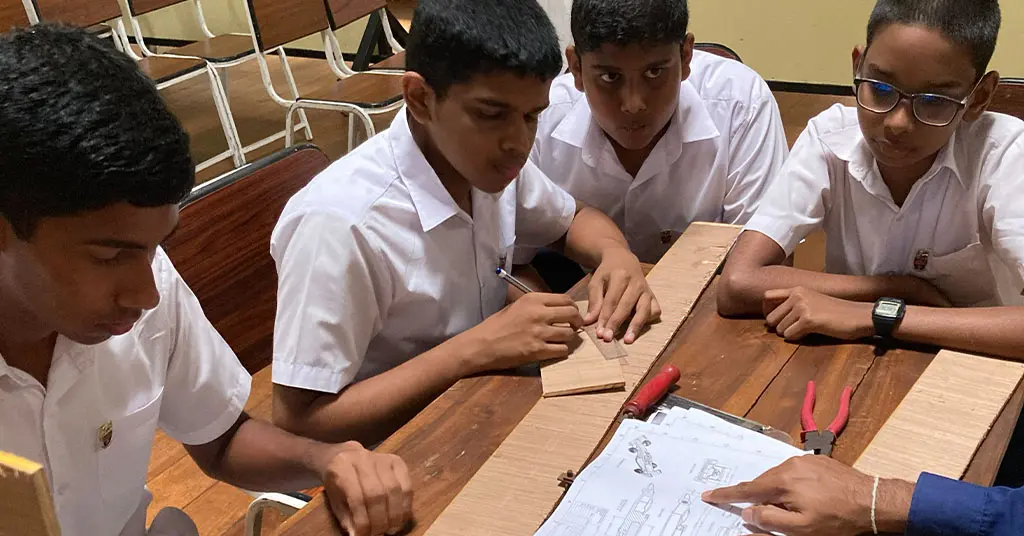
The competition required teams to build their vehicles according to a set of specifications provided by the organisers. While these requirements had to be followed precisely, participants were free to select their own materials and construction methods. CO₂ canisters used for propulsion were supplied by the organisers.
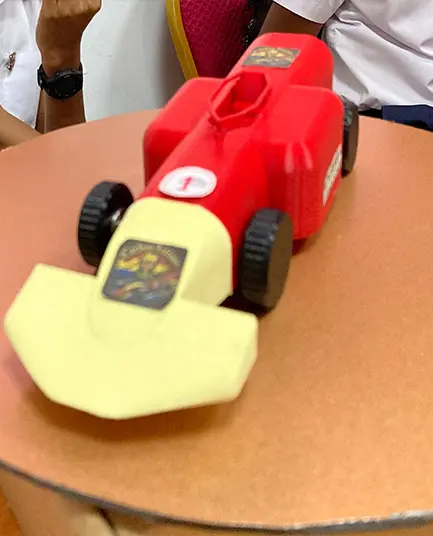
The Trinity team approached the challenge with two distinct designs. One entry featured a wooden chassis constructed from reclaimed materials and fitted with off-the-shelf wheels. The second was a modern 3D-printed vehicle designed entirely by students using computer-aided design software. Both vehicles successfully demonstrated the practical application of engineering principles, design thinking and problem-solving.
This achievement marks a notable milestone for the Automotive Society and the College. The competition was:
- The first CO₂-powered car racing competition held in Kandy.
- The first inter-school CO₂-powered car racing competition in Sri Lanka.
- The second CO₂-powered car racing competition conducted in the country.
Beyond the competition itself, the project provided students with valuable practical experience in engineering and manufacturing. Participants developed skills in:
- Reading and interpreting engineering drawings.
- Precise measurement using calipers and other measuring instruments.
- Design planning and material selection.
- Testing, evaluation and problem-solving.
- Wood-finishing techniques.
- Safe handling of tools and workshop equipment.
A particularly noteworthy aspect of the project was the revival of fretwork, once a distinctive component of the Trinity curriculum. The entire wooden structure was cut from scrap plywood using fretwork techniques and assembled at the College Automotive Workshop.
The 3D-printed vehicle was designed using Autodesk Fusion 360 software, with CAD files prepared and exported for production. The project also highlights the opportunities available to Trinity students through Autodesk Education, which provides all students of Trinity College with access to Autodesk Education Pro licences and a suite of industry-standard design and engineering software. The Society is grateful to Technotronic Futuristics, operated by Mr Venura and Mr Yasassvi Wijesekara, for providing the 3D-printing support required for the project.
The Society also acknowledges the valuable assistance provided by Mr Cheruka Rajanayake, President of the Automotive Society in 2024, during the construction of the wooden car. Appreciation is also extended to the College Maintenance Workshop for its support throughout the build process.
Team Members
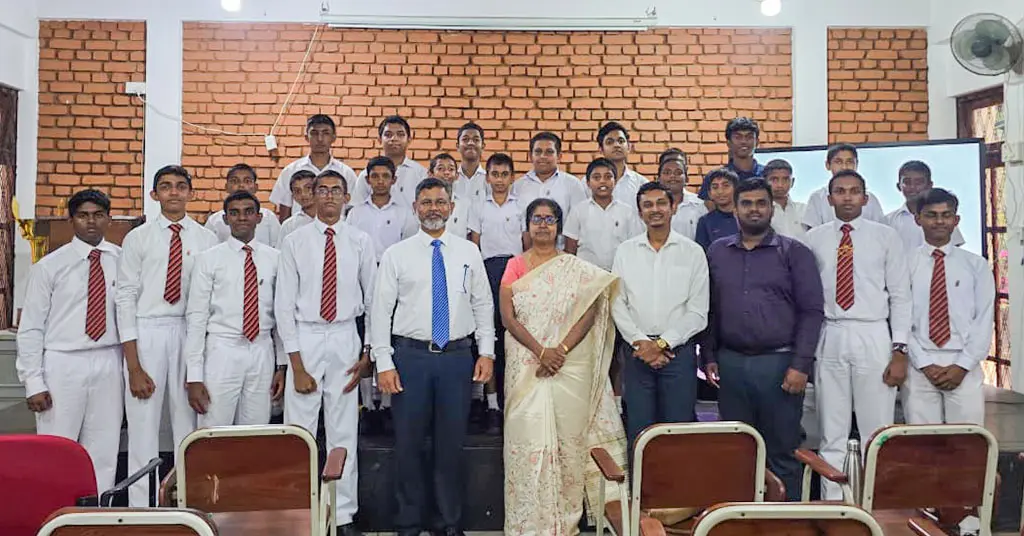
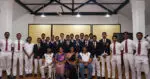
The following students represented Trinity College at the competition:
- Master Pinitha Manajina (President, Automotive Society)
- Master Gayanuka Bambaragama
- Master Menodh Koralagedara
- Master Shashmitha Ratnayake (Designer of the 3D-printed car)
- Master Chenula Abeysundara
- Master Mark Jayaratne
- Master Danil Ilankoon
- Master Dumasha Wijesekaragamage
- Master Akindhu Aththanayake