Friday, 19 June 2026 / Published in CFE Announcements, College, College News
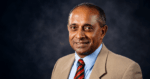
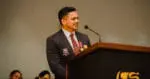
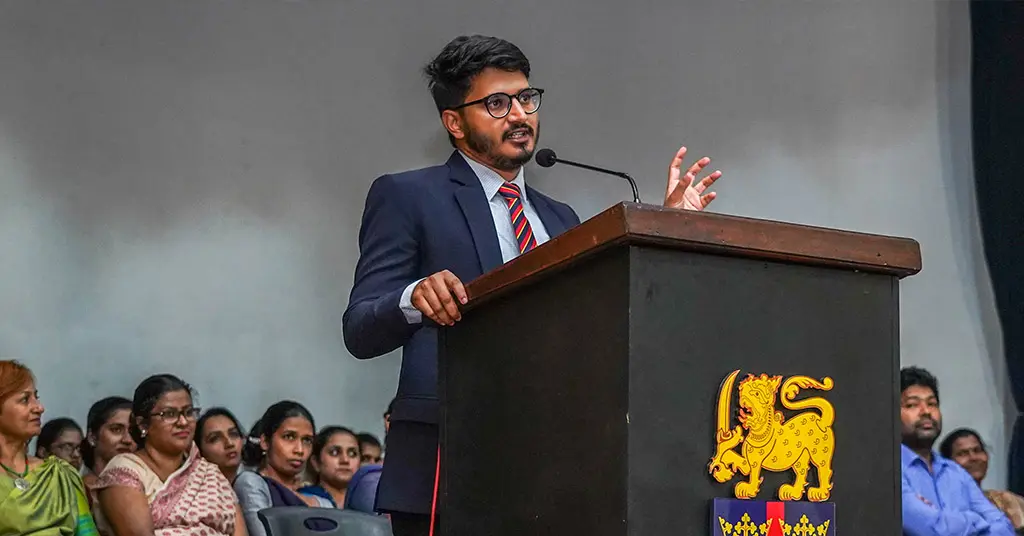
Centre for Excellence Alumni Inspiration Series  The Science Section of Trinity College recently welcomed back Old Trinitian Mr Dilshara Herath (batch of 2018) as part of the Centre for Excellence Alumni Inspiration Series. His visit provided students with a valuable opportunity to engage with a young alumnus whose academic and professional journey has taken him from the classrooms of Trinity to admission into the PhD programme at Columbia University, an Ivy League institution and one of the world’s leading centres for research and innovation.  A student of the Physical Science stream who completed his G.C.E. Advanced Level studies at Trinity in 2018, Dilshara went on to pursue a Bachelor of Science degree in Electrical and Information Engineering at the University of Ruhuna, graduating with First Class Honours. Following his undergraduate studies, he served as a Temporary Instructor at the Faculty of Engineering before joining the Multidisciplinary AI Research Centre (MARC) at the University of Peradeniya as a Research Assistant and Project Coordinator.  During his time at MARC, Dilshara contributed to several research projects in Artificial Intelligence, Signal Processing and Computer Vision. His work explored AI-powered systems for drone motor detection, industrial fault diagnosis and driver drowsiness detection, producing research with applications in national security, industrial safety and transportation. These achievements and contributions ultimately led to his acceptance into the PhD programme at Columbia University, placing him among a growing number of young Sri Lankan scholars gaining entry to leading universities around the world.  Addressing the morning assembly and later interacting with students of the Science Section, Dilshara focused not on grades or university admissions, but on the values that shaped his journey.  Drawing from his experiences as both a student and sportsman, he emphasised the importance of maintaining a balance between academic excellence and co-curricular engagement. Participation in clubs, societies, leadership opportunities and sport, he explained, helps develop qualities such as resilience, teamwork, communication, adaptability and leadership. His own journey demonstrated how experiences gained on the football field and through student activities contributed just as much to his development as those gained in the classroom and laboratory.  Another key theme of his address was kindness and service. Reflecting on his own experiences, he encouraged students to support others whenever possible, noting that meaningful relationships, opportunities and personal growth often emerge from acts of generosity and collaboration.  Dilshara also spoke about gratitude, acknowledging the role played by his parents, teachers, mentors and peers throughout his educational journey. He reminded students that success is rarely achieved alone and that recognising those who contribute to one’s growth is an important aspect of personal and professional development.  Perhaps the most encouraging message for students was his observation that one’s future is not defined by a single examination result or by how others perceive them at a particular moment in time. Progress, he explained, is built through consistency, perseverance and a willingness to embrace opportunities for learning and growth. His own story demonstrated that a student’s future is shaped not by where he begins, but by the decisions he makes, the values he cultivates and the opportunities he chooses to pursue.  A particularly inspiring aspect of the session was his emphasis on the expanding global opportunities available to Sri Lankan students. Sharing examples of Old Trinitians pursuing higher education and careers around the world, he highlighted that pathways to world-renowned universities, including Ivy League institutions, remain accessible to students who are prepared to work diligently and pursue their ambitions with purpose.  At the same time, he encouraged students to remember the importance of giving back. The knowledge, skills and experiences gained abroad, he noted, can play a significant role in contributing to the development of Sri Lanka and creating opportunities for future generations.  Trinity College extends its sincere appreciation to Mr Dilshara Herath for returning to his alma mater to share his experiences and insights with our students. His story serves as a reminder that excellence is shaped by commitment, character and perseverance throughout one’s journey.  As he prepares to commence his doctoral studies at Columbia University, College congratulates him on this achievement. We wish him every success as he embarks on this new chapter and look forward to following his future contributions to research, innovation and society. 
Wednesday, 17 June 2026 / Published in College, College News
STATEMENT BY THE PRINCIPAL – 17 JUNE 2026 It is with profound gratitude that we announce the donation of LKR 3 Billion by Eng. Nahil Wijesuriya FIMarEST (Old Boy) to Trinity College Kandy. This extraordinary gift is a powerful affirmation of confidence in our institution and our mission to shape future generations of Trinitians. The College will establish a dedicated fund to ensure prudent stewardship and sustainable deployment of this generous gift. The fund will advance educational quality, foster holistic student development, and strengthen Trinity College’s position as a leading institution in the region. On behalf of the Trinity College Community, we extend heartfelt gratitude to Eng. Nahil Wijesuriya for his unwavering commitment to educational excellence and social responsibility. Rev. Fr. Araliya Jayasundara (OSB)Principal, Trinity College Kandy
Tuesday, 16 June 2026 / Published in College, Innovators
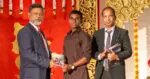
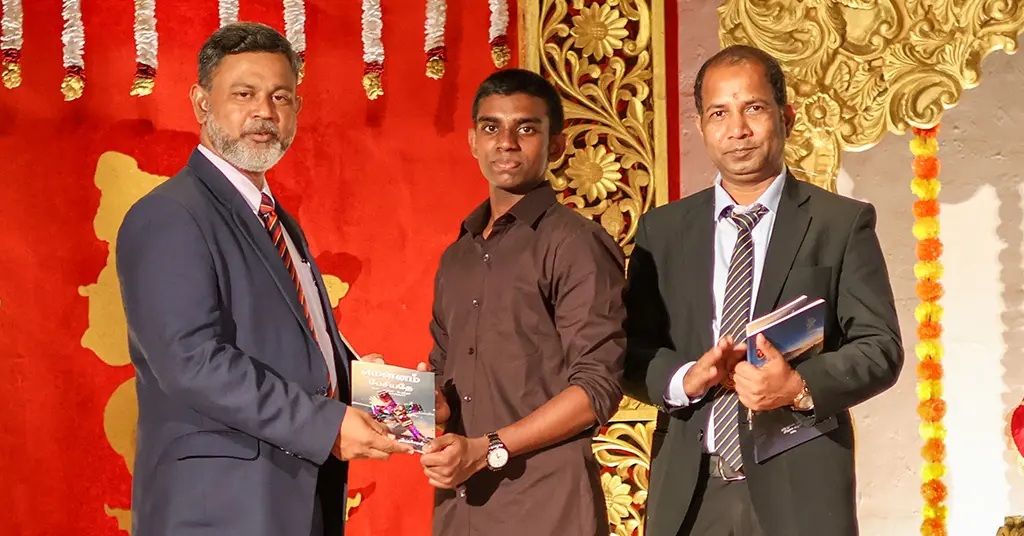
A significant milestone for the trilingual heritage of Trinity College was marked on 5 June at the Muththamizh Vizha, where Master Dilrukshan Sureshkumar officially launched his debut Tamil poetry book, Mounam Pesiyadhe (‘Silence Spoke’).  Master Sureshkumar, a Grade 12 Biology student in the Advanced Level stream, is an active contributor to the College community. He was awarded the Best All-Rounded Student of the Middle School Award in 2023 and currently serves as the President of the TED-Ed Club and Vice President of the Carnatic Music Society. Alongside his academic commitments, Dilrukshan is also a member of the Trinity College Senior Karate Team. His broader interest in literature, public speaking, music, and medicine drives his commitment to leadership and lifelong learning.   His interest in creative writing developed through a close appreciation of Tamil literature and songs, noticing how language can carry profound emotional depth. While building his confidence in English, Dilrukshan believes that true expression remains rooted in one’s mother tongue, shaping his literary style around a balance between English proficiency and cultural identity.   The collection, Mounam Pesiyadhe, translates to ‘Silence Spoke’. Dilrukshan chose the title to reflect that silence carries a powerful voice capable of inner reflection, expression, and personal understanding. The book explores deep philosophical themes, including self-realisation, nature, and emotional growth, balancing personal experiences with broader observations of the world. A particularly meaningful piece in the collection is ‘Nandri’ (‘Thank You’), dedicated to his parents, teachers, and well-wishers who supported him through periods of uncertainty.   The writing process spanned approximately ten months, beginning during his G.C.E. Ordinary Level period. Dilrukshan notes that balancing academic pressure alongside creative writing was challenging, but the experience taught him the value of consistency, discipline, and trusting one’s inner voice.   The launch event at the Muththamizh Vizha was an encouraging occasion for the school community, marking one of the first Tamil student poetry publications from the College. The Chief Guest for the evening was Dr Perumal Saravanakumar. The event featured addresses by the Vice Principal and the Chief Guest, providing an opportunity for Dilrukshan to formally acknowledge his parents and his Tamil teachers, Mrs Caroline Gnanapragasam and Mrs Sharmiladevi Duraisingham, who provided vital guidance throughout his literary journey.   The positive response from the audience highlighted the importance of the younger generation actively contributing to Tamil literature and culture. Looking ahead, Dilrukshan plans to expand his creative horizon into essays, short stories, and drama, while continuing his deep exploration of both Tamil and English literature.   An excerpt from the book reads:  என்னை எழுதிய கவிதை எந்தன் தோழன் இயற்கை சுயநலத்தால் அழித்திடாதே எந்தன் தோழனை இயற்கை எனும் அமுதம் என்னை எழுதிய கவிதை – அன்று ! நான் எழுதிய கவிதை – இன்று !   English translation:  The poem that once wrote me was my companion: Nature. Do not destroy my companion through selfishness. Nature; the nectar of life. I was a poem written by nature, once; ‘Nature’ was the poem written by me, today.   For fellow young writers, Dilrukshan offers clear advice: “Do not begin writing with the expectation of immediate recognition or a perfect final outcome. Instead, make writing a habit built on passion, consistency, and discipline, regardless of the challenges you may face.” 
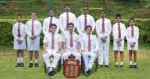
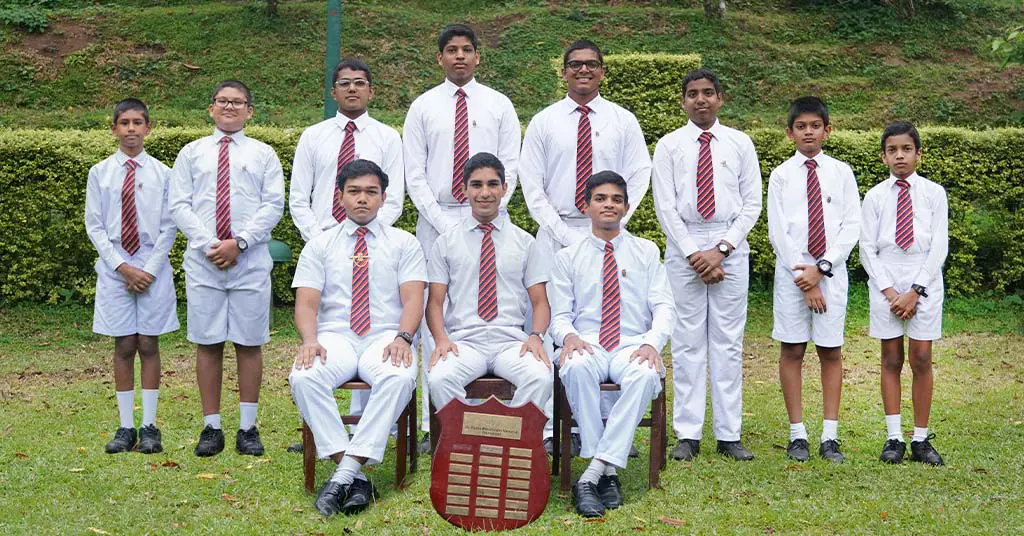
Trinity College emerged unbeaten champions at the Dr. Vijitha Weerasinghe Memorial Championship 2026, held at Royal College from 5 to 7 June. Competing against a record field of 70 teams in the largest debating tournament ever held in Sri Lanka, Trinity A completed a flawless campaign, winning every preliminary and knockout round to secure the title. The championship introduced Sri Lanka’s first partial double octo-final break, making it one of the most competitive tournaments on the national debating calendar. Trinity College fielded four teams at the event, reflecting the strength and depth of debating at the College. Trinity A comprised Abeesha Wickramasinghe, Nimuthu Pathiraja and Nethula Hettihewage. From the opening round, Trinity A found its rhythm, recording a perfect 5-0 record in the preliminary rounds. Victories over St. Bridget’s Convent A, St. Bridget’s Convent B, Anula Vidyalaya B, S. Thomas’ College A and Ananda College B saw the team finish as the top-ranked side heading into the knockout stages. The Trinitians faced their first knockout challenge against Elizabeth Moir School in the Octo-finals. In one of the closest debates of their campaign, Trinity A edged through on a narrow 1-0 split decision. The Quarter-finals against Ananda College B saw a more assured performance, with the team securing a clear 1-0 victory. Another stern test awaited in the Semi-finals against Hillwood College A. Trinity A once again demonstrated composure under pressure, prevailing on a 2-1 split and earning a place in the Grand Final. Facing Visakha Vidyalaya in the championship debate, Trinity A delivered its strongest performance of the tournament. Speaking with confidence and clarity, the team secured a unanimous 5-0 decision from the adjudication panel, completing an extraordinary unbeaten run. Having won every preliminary and knockout debate, Trinity A completed a rare grand slam to be crowned champions of the Dr. Vijitha Weerasinghe Memorial Championship 2026. Trinity B also enjoyed a strong tournament. Finishing eighth after the preliminary rounds, the team earned a direct berth to the Octo-finals, bypassing the newly introduced partial double octo-finals. Their campaign came to an end in a closely contested debate against Ananda College B, falling short by just 0.5 speaker points. Nevertheless, their top-eight finish highlighted the quality of Trinity’s representation at the championship. Trinity’s success was reflected in the individual rankings as well. Nimuthu Pathiraja finished as the tournament’s second-best speaker, missing first place by only 0.1 speaker points. Three other Trinitians also secured places among the tournament’s top 30 speakers. The championship marks Trinity College’s first open debating tournament title since RI ISDC 2023 and adds another notable achievement to the College’s debating tradition. In a tournament that set new records for participation and competition, Trinity’s debaters ensured that their campaign would be remembered among its defining performances. This achievement would not have been possible without the guidance and support of coach Mr Senuka Seneviratne, whose mentorship played an invaluable role throughout the tournament. The team is also grateful to the Master-in-Charge, Mr Achintha Jayasooriya, who accompanied the contingent, and to the Teacher-in-Charge of Debating, Mrs Fathima Majeed, for their continued encouragement and commitment to debating at Trinity. Teams Representing Trinity College Trinity A Trinity B Trinity C Trinity D Reviewed by Abeesha Wickramasinghe (Captain, English Debating Team)
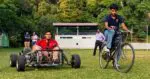
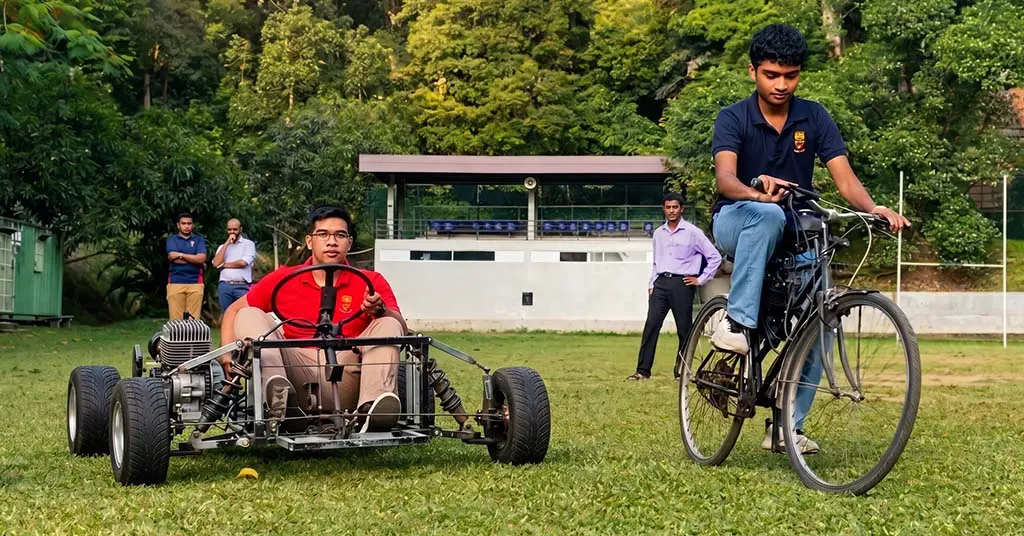
By Master T. Madugalle, Master S. Mathavan and Mr Subash Dhanasekara This is the story of how a team of student innovators took a pile of salvaged automotive parts and raw scrap metal and engineered them into a fully functioning, high-performance custom go-kart. Moving away from standard commercial kits, the project’s focus was to solve geometric, structural, and powertrain integration challenges using components from three-wheelers, motorcycles, and other automobile components. The final prototype demonstrates a high power-to-weight ratio, an optimised drivetrain for low-end torque, and a customised single-wishbone suspension system, validating the viability of sustainable, low-cost mechanical fabrication. Project Specifications & Team Project Team Grade 12 (2025) Grade 11 (2025) Former Committee * Nazmi Azman* Kawishka Roshan* Shamin Udupuldeniya* Toshan Madugalle* Menul Bandara * Pinitha Samarasinghe* Gayanuka Bambaragama* Menula Bandara* Dihen Benthota* Sanuga Ranaweera* Nithin Niduwara * President: Master C. Rajnayake 1. Structural Design & Chassis Geometry The foundational architecture of the vehicle utilizes a bespoke ladder-style chassis engineered from structural box-bar steel. 2. Steering & Front Suspension Innovation To achieve high responsiveness and directional stability, a steering system was designed and manufactured in-house using the Pitman arm steering concept. The steering wheel and linking system utilize old motor vehicle components from the College Automotive Workshop stock. 3. Powertrain Integration The vehicle is propelled by a 70cc internal combustion 2-stroke petrol engine, which was initially intended for a moped half the size and weight of our project. After mounting of the engine, one major problem was the slipping of the centrifugal clutch in the internal transmission due to the combined weight of the kart and the driver. As a result, the gearbox was serviced by the team with fresh parts and lubricants, but it did not make a noticeable change in the performance. After experimenting with the gear ratios, we opted for a gear reduction system to maximize the torque by using the 2-stroke engine’s high RPM limit to our advantage. We integrated a 2-stage gear reduction drive system, where the output sprocket of the internal transmission drives another reduction gear, which then drives the single rear axle. 4. Rear Axle Dynamics & Braking System The rear-end drivetrain architecture incorporates heavy-duty motorcycle components to handle power transmission and braking stresses. Workshop & Collaboration This entire vehicle was planned, assembled, and finished utilizing the College Workshop’s facilities, without any outsourcing. Manufacturing processes were carried out with the help of the Maintenance Workshops. Final fabrication of the gear system and suspension was carried out at the workshop site of Master S. Mathavan (President of the Automotive Society – 2025). Members and former committee members contributed to the build to the best of their capacities.
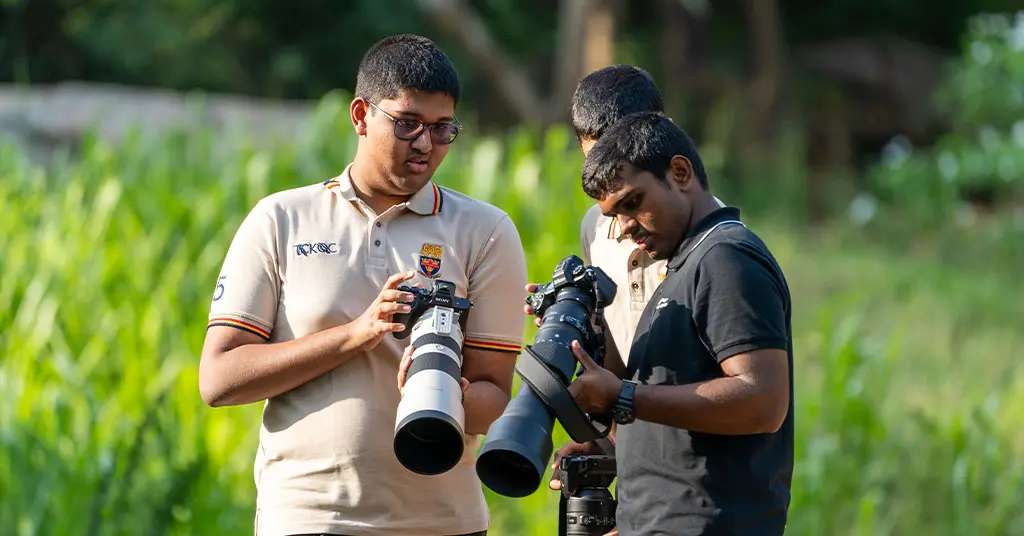
Reviewed by Denuka Somaratne (Treasurer, Trinity College Ornithology Club)  As part of the preparations for Feathers, the Trinity College Ornithology Club’s annual photographic album, members of the Club conducted a photographic field visit to Sigiriya Sanctuary and Popham’s Arboretum on 28 May 2026.  The programme aimed to document birdlife and natural habitats that will contribute to the Club’s upcoming publication, which seeks to reveal the often-overlooked stories of Sri Lanka’s birds and the environments they inhabit.  Unlike conventional birdwatching programmes that focus primarily on species counts, this field visit was designed to capture the stories behind the birds themselves. The selected locations offered opportunities to observe avian life during a period when bird activity is generally lower than at peak times of the year. Although fewer birds were encountered than anticipated, the experience highlighted an important aspect of both ornithology and wildlife photography: meaningful observations are often found in nature’s quieter moments.  From the early hours of the morning, participants explored the habitats of Sigiriya Sanctuary, carefully observing and photographing birds within their natural surroundings. Students focused not only on capturing aesthetically pleasing images but also on documenting behaviour, habitat use, feeding patterns, and interactions with the environment. Through this approach, photography became a medium for storytelling, allowing each image to convey a deeper understanding of the lives of the birds being photographed.  The programme later continued at Popham’s Arboretum, a site renowned for its biodiversity and conservation efforts. The restored woodland habitats provided a contrasting setting and valuable opportunities for observation and photography.  The Trinity College Ornithology Club extends its sincere appreciation to the team at Popham’s Arboretum for their warm hospitality and guidance throughout the visit. Their insights into the site’s biodiversity and conservation work greatly enriched the learning experience.  Beyond photography, the field visit encouraged participants to develop their understanding of bird identification, ecology, and conservation. By spending time in the field and observing birds in their natural habitats, students gained a deeper appreciation of the delicate relationship between wildlife and the ecosystems that sustain them.  The photographs gathered during this programme will form part of Feathers, an album that aims to showcase far more than striking images. Through photographs and accompanying narratives, the publication will bring to light untold stories of birds, lesser-known habitats, and hidden natural treasures from across Sri Lanka. It seeks to inspire curiosity, appreciation, and a stronger commitment to conserving the country’s rich avian heritage.  This field visit represents only one chapter in the journey of creating Feathers. Many more stories remain to be told, and many more remarkable places remain to be discovered.  Stay tuned for the launch of Feathers, where untold stories, hidden landscapes, and extraordinary moments from the world of birds will be revealed through the lenses of Trinity’s young ornithologists and photographers. 
Wednesday, 03 June 2026 / Published in Announcements, College
As part of our ongoing commitment to ensuring the safety, wellbeing, and welfare of all students, Trinity College Kandy has introduced a dedicated email channel for parents and guardians to communicate concerns relating to student wellbeing. Concerns regarding bullying, harassment, student safety, or other welfare-related matters may be submitted to concerns@trinitycollege.lk. To ensure that concerns can be properly reviewed and addressed, all submissions must include: Anonymous complaints, or submissions that do not include the required identification and contact information, will not be considered. This channel is intended solely for matters relating to student wellbeing and welfare. General inquiries and unrelated requests should be directed through the appropriate College communication channels. Review Process The College appreciates the cooperation of parents and guardians in helping to maintain a safe, inclusive, and caring environment for every Trinitian.
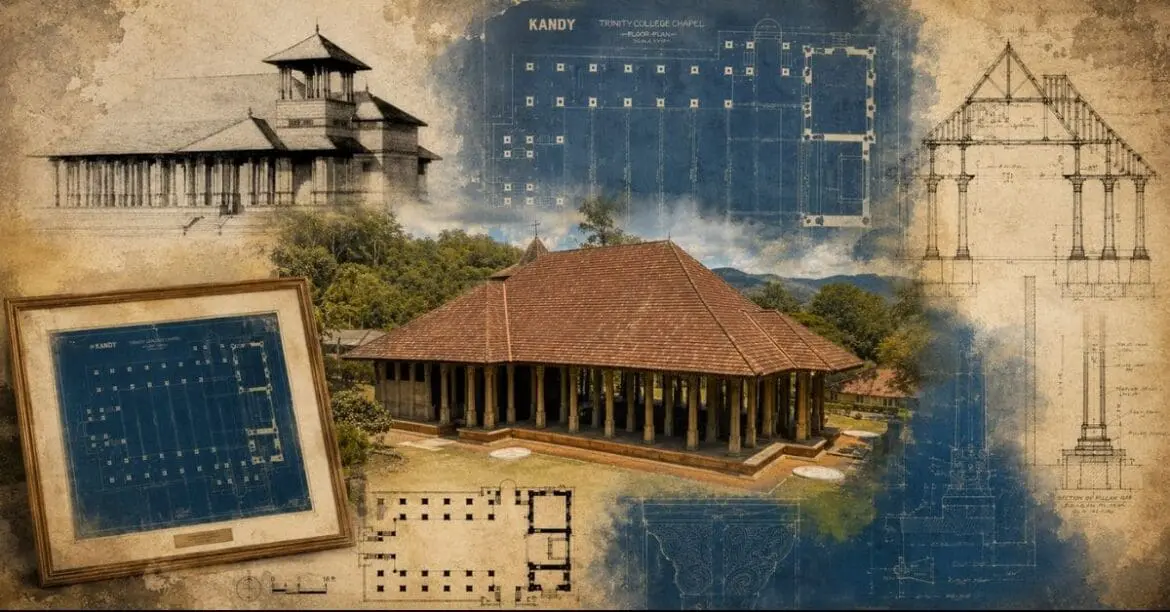
Few creations endure as powerfully as those built with a vision that extends beyond a single lifetime. At Trinity, many buildings have stood for more than a century, quietly bearing witness to generations of students who have passed through their halls. Among them, the College Chapel occupies a special place, not merely as a landmark of architectural beauty, but as a symbol of the ideals upon which the College was founded.  For over one hundred years, the Chapel has remained at the heart of Trinity. Its soaring pillars, intricate carvings, and distinctive character have become familiar to generations of Trinitians. Yet behind the stone, timber, and craftsmanship lies a story of vision, dedication, and painstaking work, a story preserved today through a remarkable collection of original architectural drawings.  At the centre of that story stands Rev. Lewis John Gaster.  Rev. Gaster arrived at Trinity in January 1911 during the principalship of Rev. A. G. Fraser. During his years at the College, he became widely known as the “Master of Method”, a title that reflected the esteem in which he was held as an educator. He later served as Head Master and eventually as Vice-Principal. Beyond his contributions to education, he played an important role in fostering unity among the various branches of the Church in Ceylon, helping to establish a spirit of cooperation that continued to grow under his influence.  Yet it is perhaps through the College Chapel that Rev. Gaster’s vision found its most enduring expression.  The Chapel was never conceived merely as a building. Every detail reflected careful thought and purpose. The carvings in wood and stone, many of which continue to draw admiration today, were executed under Rev. Gaster’s close personal supervision. His commitment extended beyond broad architectural concepts to the finest details of craftsmanship, ensuring that the finished structure would embody both beauty and meaning.  The earliest surviving evidence of this vision can be found in a drafted plan dated 10 October 1922, prepared in Colombo under Rev. Gaster’s supervision. The drawing is believed to have been executed by Henry Schaetti, the distinguished Swiss architect whose work would later leave a lasting influence on Sri Lankan architecture.  However, the transformation of vision into reality required another gifted individual whose contribution deserves equal recognition.  That individual was Mr Clement Leo Unamboowe.  Mr Unamboowe entered Trinity College on 3 March 1911 from C. M. S. Gampola at the age of ten. Following his schooling, he joined Walker Sons and Co. Ltd., where his talent as a draughtsman began to flourish. Rev. Gaster himself described him as a young man who was “developing into an excellent draughtsman”, noting not only his technical ability but also the originality and artistic merit evident in his work.  At a remarkably young age, Mr Unamboowe undertook the demanding task of preparing the detailed architectural blueprints of the Chapel. He was also responsible for drafting the plans of the Gaster Block, which today houses Grade 11 classrooms.  In an era long before digital design tools, architectural drawings demanded exceptional patience, accuracy, and skill. Every measurement, line, and detail had to be drafted by hand. Through countless hours of meticulous work, Mr Unamboowe translated Rev. Gaster’s ideas into technical drawings that builders could follow, creating the bridge between imagination and construction.  Nearly a century after those drawings were prepared, an extraordinary chapter was added to their story.  On 19 August 2022, as Trinity College marked the centenary of the laying of the Chapel’s foundation stone, the College Archives received a gift of immense historical significance. The original drawings prepared by Mr C. L. Unamboowe and signed by Rev. L. J. Gaster in October 1924 were generously donated to the Archives, ensuring their preservation for future generations.  The collection included:  These invaluable documents were donated by Mr Unamboowe’s grandsons, Mr Prince Unamboowe and Mr Neil Unamboowe, whose generosity has returned an important piece of Trinity’s architectural heritage to the College.  Today, visitors entering the Chapel see a completed masterpiece. They see the stone pillars, the timber work, the carvings, and the familiar silhouette that has become inseparable from Trinity’s identity. What they do not immediately see are the years of thought, planning, and labour that preceded its construction.  The original blueprints allow us to glimpse that earlier story.  They remind us that great buildings do not emerge by chance. They begin as ideas, shaped by vision, refined through skill, and realised through dedication. Rev. Gaster provided the inspiration and direction. Mr Unamboowe transformed that vision into drawings of remarkable precision. Together, they helped create a building that has served the College for more than a century.  As these drawings now rest within the College Archives, they offer more than a record of architectural history. They preserve the story of the individuals whose work continues to shape the experience of every Trinitian who enters the Chapel. More than a century after the first lines were drawn on paper, their legacy remains etched in stone, timber, and memory.  __  Article by Navindu Karunarathne (Student Archivist)  Edited by S.A.  Sources: The Centenary Number; A Sinhalese Chapel for Trinity College, Kandy; Trinity College, Kandy Archives; History of the Unamboowe Family; internet research. 
Tuesday, 02 June 2026 / Published in College, Kindergarten, Newsletters
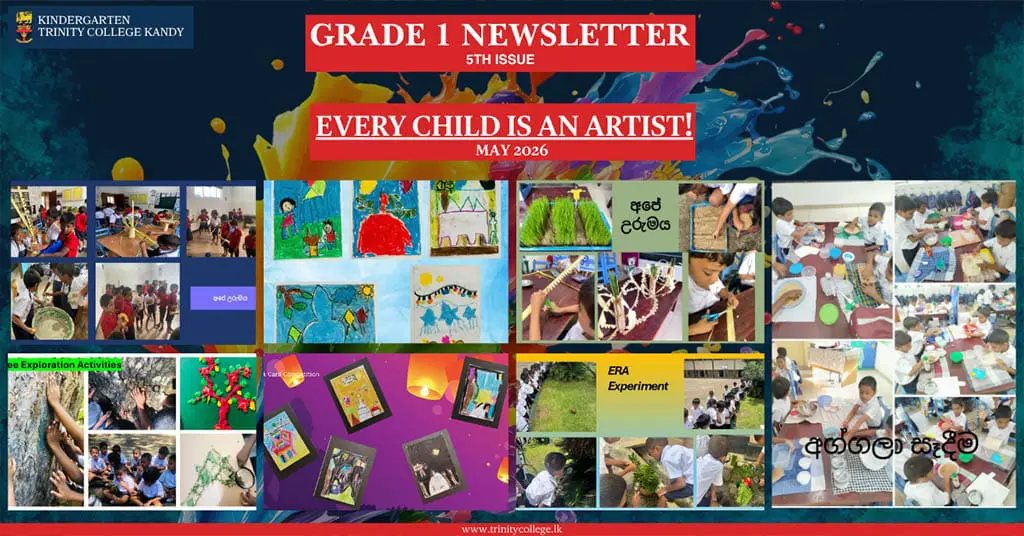
This is a monthly project done by the Kindergarten Teachers May 2026
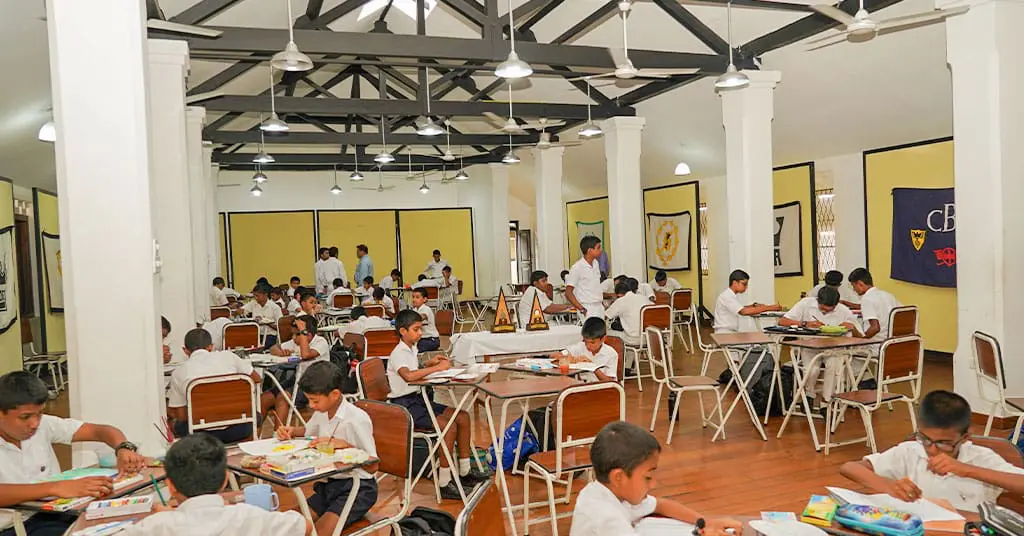
Reviewed by Master Sawin Danthasinghe (President, Trinity College Art Circle)  The Trinity College Art Circle successfully organised Art Beyond Boundaries 2026, the Inter-House Art Competition, on Monday, 25 May 2026 at Napier Hall. Held under the theme ‘Heritage & Culture: Sri Lankan Traditions, History and Cultural Diversity’, the event provided students with a vibrant platform to express their artistic talents and interpretations through visual art.  The competition commenced with a welcome address by the President of the Trinity College Art Circle, Master Sawin Danthasinghe, who warmly welcomed the participants, teachers and distinguished guests. The opening prayer was conducted by the Chaplain, Rev. Fr. Sanjaya Gamage.  An address was then delivered by Mr Wasana Dissanayake, Director of the Trinity College Co-Curricular Enrichment Initiative (TCCEI), who appreciated the efforts of the organisers and encouraged students to continue nurturing their creativity and passion for art. This was followed by remarks from the Master-in-Charge of the Trinity College Art Circle, Mr Senarath Rathnayake. The competition was officially declared open by the Media Coordinator, Master Moksha Waranidu.  A total of 60 participants, with six representatives from each House, took part in the competition across several age categories. Students interpreted the theme through a wide range of artistic styles and media, including traditional art, poster art, graphic art, abstract art and mixed media. Throughout the event, Napier Hall was filled with colour, imagination and artistic enthusiasm as participants showcased their creativity and originality.  The artworks submitted for Art Beyond Boundaries 2026 will be evaluated by an independent panel of judges in mid-June 2026. The judging process will assess the participants’ creativity, originality, technical skill and interpretation of the theme. The results of the competition will be announced following the completion of the evaluation process.  Acknowledgements  This event would not have been possible without the support and leadership of the Principal, Very Rev. Fr. Araliya Jayasundra (Prior OSB), together with the Vice Principals of the College.  Special appreciation is extended to Mr Wasana Dissanayake, Director of TCCEI, for his encouragement, guidance and valuable support throughout the event.  The Trinity College Art Circle also expresses its sincere gratitude to Mr Senarath Rathnayake, Master-in-Charge of the Art Circle, for his dedication, guidance and efforts in organising the competition.  Appreciation is further extended to the House Masters and Mistresses, teachers, participants, the Trinity College Media Unit, members of the Trinity College Art Circle Committee and the support staff for their commitment, cooperation and contribution towards making Art Beyond Boundaries (ABB) 2026 a memorable occasion. 

News and Media

Please fill all widget/element settings!